[an error occurred while processing this directive]

Journal of Chinese Integrative Medicine ›› 2005, Vol. 3 ›› Issue (2): 123-127.doi: 10.3736/jcim20050212

• Original Experimental Research • Previous Articles     Next Articles

Apoptosis-promoting effect of Panax notoginseng extracts on MNNG-transformed GES-1 cells

Jun-xiang Li1,Zhi-bin Wang1,Ling-qun Zhu2,Fu-ling Niu2,Wei Cui2   

  1. 1. Department of Gastroenterology, Dongfang Hospital, Beijing University of Traditional Chinese Medicine, Beijing 100078, China
    2. Laboratory of Internal Medicine, Dongzhimen Hospital, Beijing University of Traditional Chinese Medicine, Beijing 100700, China
  • Online:2005-03-20 Published:2005-03-20
  • Contact: Jun-xiang Li E-mail:lijx1226@263.net

Objective

To study the apoptosis-promoting effect of the serum from Panax notoginseng extracts-fed dog on precancerous gastric cells by means of flow cytometry.

Methods

In the experiment, we adopted eternalized human gastric mucosa epithelium GES-1 cells transformed by N-methyl-N’-nitro-N-nitroso-guanidine (MNNG) (MC cells) as the model of precancerous lesions for study in vitro. We took the serum of a dog before and at two different points of time (2 and 6 hours) after feeding the dog with Panax notoginseng extracts for experiment. The MC cells were cultured in mediums with different concentrations of the medicated serum at 2- or 6-hour point of time for 72 hours. By means of flow cytometry, we examined the apoptosis-promoting effects of the serums on the MC cells.

Results

The medicated serums at these 2 points of time had significant effects in promoting MC cell apoptosis. The proportions of apoptotic cells in culture mediums with medicated serums had a significant increase as compared with those in culture mediums with non-medicated serums (serum obtained before administration of extracts to the dog) under the same conditions (P<0.05). The number of MC cells in G0/G1 phase was decreased (P<0.05) and that in G2/M phase increased (P<0.05), while no consistent changes were observed in S phase.

Conclusion

The medicated serums obtained at the two different points of time have significant apoptosis-promoting effects on MC cells. They decrease the number of MC cells in G0/G1 phase and increase the number of MC cells in G2/M phase. This is probably responsible for the effects of Panax notoginseng extracts in inhibiting the proliferation of MC cells and promoting its apoptosis.

Key words: Panax notoginseng, Gastric cancer, Cell culture, Apoptosis, Animals, Laboratory

CLC Number: 

  • R285.6

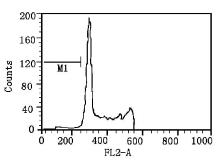
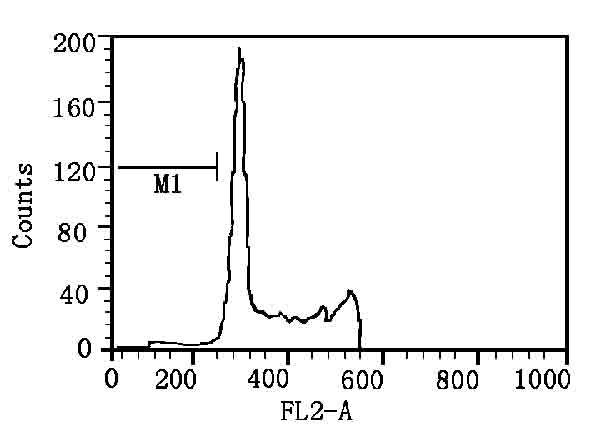
Fig 1

Flow cytometric analysis of MC cell apoptosis in normal control medium"

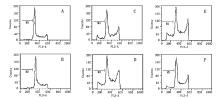
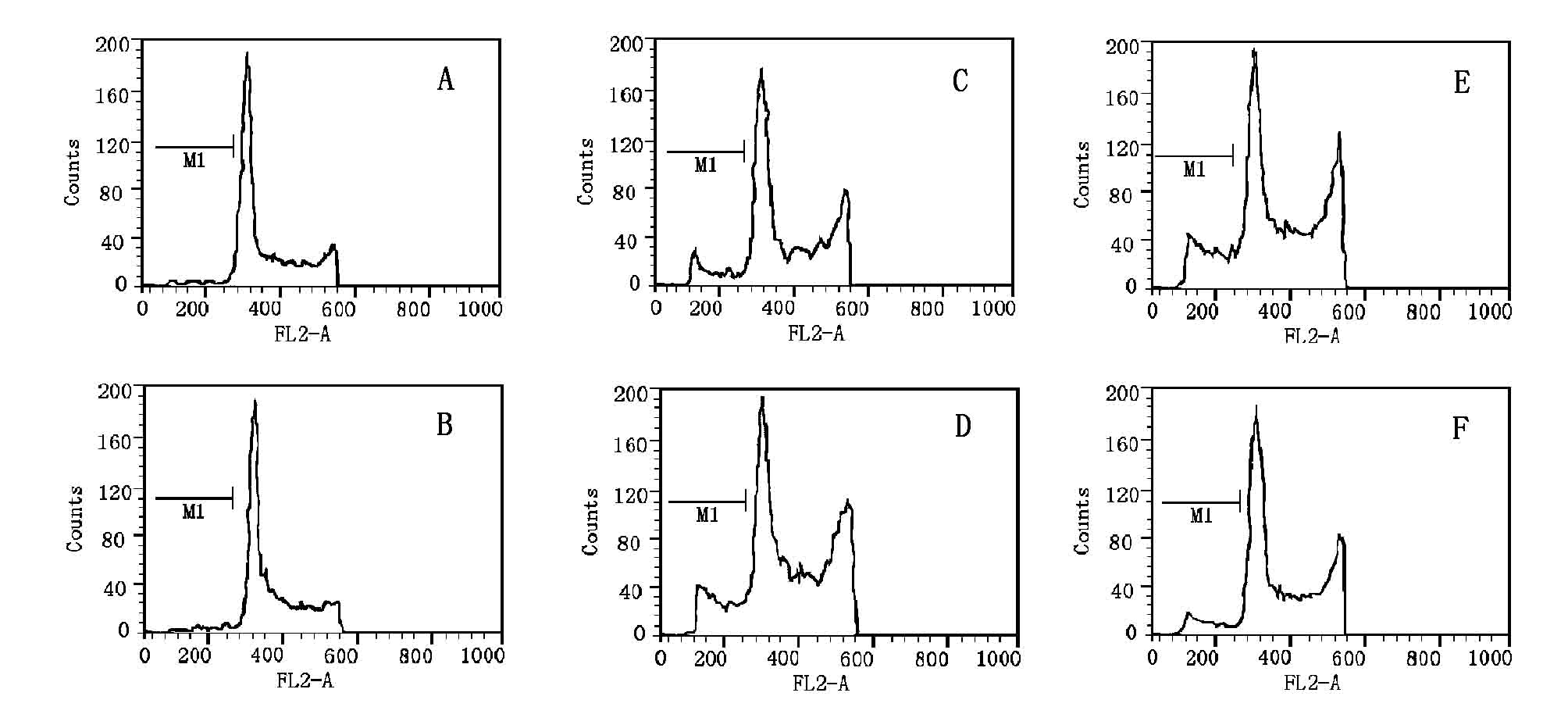
Fig 2

Flow cytometric analysis of MC cell apoptosis in mediums with different kinds of serumsA: Culture medium with 8% of non-medicated serum; B: Culture medium with 4% of non-medicated serum; C: Culture medium with 8% of medicated serum at 2 h; D: Culture medium with 4% of medicated serum at 2 h; E: Culture medium with 8% of medicated serum at 6 h;F: Culture medium with 4% of medicated serum at 6 h."

Tab 1

Apoptotic rate of MC cells cultured in different mediums ($\bar{x}$±s)"

Culture medium n Apoptotic rate of MC cells (%)
Normal control medium 6 0.71±0.36
Culture medium with 8% of non-medicated serum 6 1.09±0.40
Culture medium with 4% of non-medicated serum 6 2.27±1.10*
Culture medium with 8% of medicated serum at 2 h 6 13.13±1.32*
Culture medium with 4% of medicated serum at 2 h 6 5.76±1.21*
Culture medium with 8% of medicated serum at 6 h 6 11.24±2.28*
Culture medium with 4% of medicated serum at 6 h 6 6.02±1.47*

Tab 2

Effects of different culture mediums on MC cell cycles ($\bar{x}$±s)"

Culture medium n MC cells in different cell cycles (%)
G0/G1 G2/M S
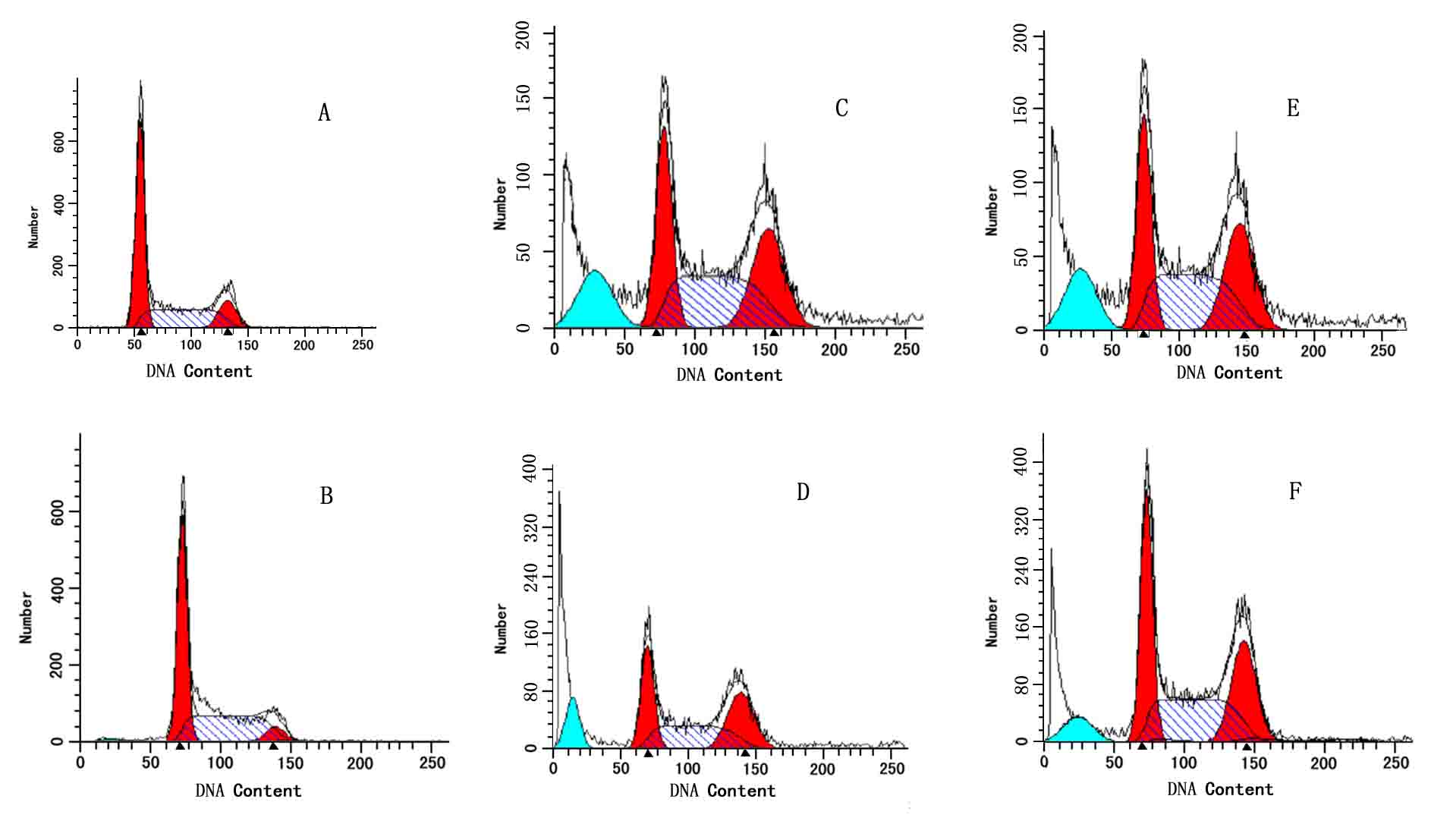
Normal control medium 6 54.76±1.24 9.96±1.99 35.27±0.87
Culture medium with 8% of non-medicated serum 6 45.48±2.54* 6.86±0.96 47.67±2.76
Culture medium with 4% of non-medicated serum 6 46.12±3.92* 17.58±2.72* 36.30±1.30*
Culture medium with 8% of medicated serum at 2 h 6 27.43±1.22* 40.11±4.29* 32.46±2.26
Culture medium with 4% of medicated serum at 2 h 6 28.84±3.66* 39.79±6.12* 31.36±2.48*
Culture medium with 8% of medicated serum at 6 h 6 30.36±1.90* 35.23±6.97* 33.94±4.46
Culture medium with 4% of medicated serum at 6 h 6 35.97±1.16* 26.42±1.03* 37.61±1.43

Fig 3

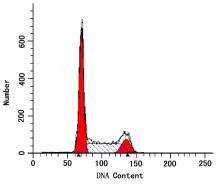
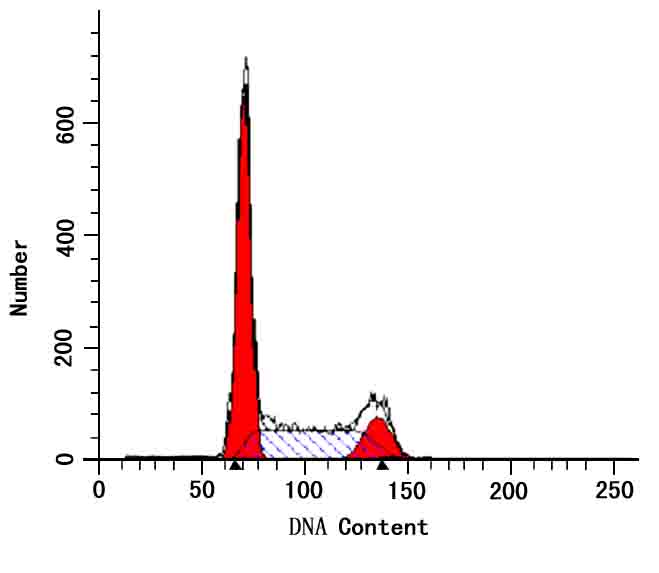
DNA analysis of cell cycles of MC cells cultured in normal control medium"

Fig 4

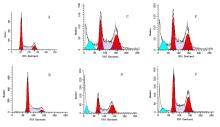
DNA analysis of cell cycles of MC cells cultured in mediums with different kinds of serumsA: Culture medium with 8% of non-medicated serum; B: Culture medium with 4% of non-medicated serum; C: Culture medium with 8% of medicated serum at 2 h; D: Culture medium with 4% of medicated serum at 2 h; E: Culture medium with 8% of medicated serum at 6 h; F: Culture medium with 4% of medicated serum at 6 h."

[1] 王志斌, 李军祥, 朱陵群 , 等. 三七提取物对GES-1细胞及MNNG转化后GES-1细胞增殖的抑制作用[J]. 中西医结合学报, 2004,2(6):445-449
[2] 石雪迎, 赵凤志, 戴欣 , 等. 三七对胃癌前病变大鼠胃黏膜癌基因蛋白异常表达的影响[J]. 北京中医药大学学报, 2001,24(6):37-39
doi: 10.3321/j.issn:1006-2157.2001.06.013
[3] Shao ZM, Alpaugh ML, Fontana JA , et al. Genistein inhibits proliferation similarly in estrogen receptor-positive and negative human breast carcinoma cell lines characterized by p21WAF1/CIP1 induction, G2/M arrest, and apoptosis[J]. J Cell Biochem, 1998,69(1):44-54
doi: 10.1002/(ISSN)1097-4644
[4] Frey RS, Li J, Singletary KW . Effects of genistein on cell proliferation and cell cycle arrest in nonneoplastic human mammary epithelial cells: involvement of Cdc2, p21(waf/cip1), p27(kip1), and Cdc25C expression[J]. Biochem Pharmacol, 2001,61(8):979-989
doi: 10.1016/S0006-2952(01)00572-X
[5] 崔洪斌, 宋丹凤, 那晓琳 , 等. 金雀异黄素抑制人胃癌细胞增殖与G2/M期阻滞作用的体外研究[J]. 营养学报, 2003,25(1):10-13
[1] Avijit Paul, Kausik Bishayee, Samrat Ghosh, Avinaba Mukherjee, Sourav Sikdar, Debrup Chakraborty, Naoual Boujedaini, Anisur Rahman Khuda-Bukhsh. Chelidonine isolated from ethanolic extract of Chelidonium majus promotes apoptosis in HeLa cells through p38-p53 and PI3K/AKT signalling pathways. Journal of Chinese Integrative Medicine, 2012, 10(9): 1025-1038.
[2] Samuel Joshua Pragasam, Vachana Murunikara, Evan Prince Sabina, Mahaboobkhan Rasool. Antiperoxidative potential of p-coumaric acid, a common dietary phenol, in adjuvant-induced arthritis in rats. Journal of Chinese Integrative Medicine, 2012, 10(8): 932-938.
[3] Zi-hui Li, Jian Wang, Rong-lin Cai, You-wen Wang, Jian-peng Hu. Establishment and evaluation of a rat model of ulcerative colitis with syndrome of dampness stagnancy due to spleen deficiency. Journal of Chinese Integrative Medicine, 2012, 10(8): 918-924.
[4] Dong-mei Zhang, Li-xia Lou, Ai-ming Wu, Xi-ying Lü, Zhao-juan Hu, Yan-hong Zhang, Hong-fang Liu. Effects of Astragalus membranaceus and Potentilla discolor mixture on insulin resistance and its related mRNA expressions in KKAy mice with type 2 diabetes. Journal of Chinese Integrative Medicine, 2012, 10(7): 821-826.
[5] Yan Guan , Hui Zhang, Wei Zhang, Shi-bing Su . Analysis of differential gene expression profile in peripheral blood of patients with chronic hepatitis B and syndromes of dual deficiency of liver and kidney yin and accumulation of dampness heat. Journal of Chinese Integrative Medicine, 2012, 10(7): 751-756.
[6] Lin Wang, Guan-liang Wang, Jia-han Liu, Di Li, De-zeng Zhu, Liang-neng Wu . Effects of ursolic acid in ameliorating insulin resistance in liver of KKAy mice via peroxisome proliferator-activated receptors α and γ. Journal of Chinese Integrative Medicine, 2012, 10(7): 793-799.
[7] Yogesh Bendale, Vineeta Bendale, Saili Paul, Soumya Sundar Bhattacharyya. Green synthesis, characterization and anticancer potential of platinum nanoparticles Bioplatin. Journal of Chinese Integrative Medicine, 2012, 10(6): 681-689.
[8] Su-fang Zhang, Chang-quan Ling , Bai Li, Hong-yun Chen , Zhe Chen. Effects of Sisheng Decoction on the immunity and anti-stress function in mice with spleen deficiency syndrome. Journal of Chinese Integrative Medicine, 2012, 10(12): 1465-1469.
[9] Samadder Asmita, Das Jayeeta, Das Sreemanti, Das Durba, De Arnab, Bhadra Kakali, Rahman Khuda-Bukhsh Anisur. Dihydroxy-isosteviol methyl ester of Pulsatilla nigricans extract reduces arsenic-induced DNA damage in testis cells of male mice: Its toxicity, drug-DNA interaction and signaling cascades. Journal of Chinese Integrative Medicine, 2012, 10(12): 1433-1442.
[10] Yan-qin Bian, Bing-bing Ning , Hong-yan Cao , Yan LU , Cheng Liu , Gao-feng Chen , Jia Liu , Ping Liu, Ming-yu Sun. Formula-syndrome correlation study of three classical anti-jaundice formulas in inhibition of liver fibrosis induced by dimethylnitrosamine in rats. Journal of Chinese Integrative Medicine, 2012, 10(12): 1405-1412.
[11] Min Zhu , Mi Zhou , Ying Shi , Wen-wei Li. Effects of echinacoside on MPP+-induced mitochondrial fragmentation, mitophagy and cell apoptosis in SH-SY5Y cells. Journal of Chinese Integrative Medicine, 2012, 10(12): 1427-1432.
[12] Mukherjee Avinaba, Sikdar Sourav, Bishayee Kausik, Paul Avijit, Ghosh Samrat, Boujedaini Naoual, Rahman Khuda-Bukhsh Anisur. Ethanolic extract of Thuja occidentalis blocks proliferation of A549 cells and induces apoptosis in vitro. Journal of Chinese Integrative Medicine, 2012, 10(12): 1451-1459.
[13] Hui-jiao Liang , Zhen-jiao Liang , Xiao-ping Wang. Three-dimensional reconstruction of the Lung Meridian of Hand-Taiyin with continuous thin-section CT image. Journal of Chinese Integrative Medicine, 2012, 10(12): 1400-1404.
[14] Yuan-jie Wu , Zhao-hui Fang , Shu-guo Zheng , Yuan-bo Wu , Ai-hua Fan. Effects of Chinese herbal medicine Danzhi Jiangtang Capsule and exercise on JNK signaling pathway in pancreatic tissues of diabetic rats. Journal of Chinese Integrative Medicine, 2012, 10(11): 1279-1285.
[15] You-hua Wang , Shang Li , Bin-rui Yang , Lun-qing Zhang , Xin Zhou , Bei-wen Xu, Ming-yuan Li . Use of zebrafish models for the research of traditional Chinese medicine. Journal of Chinese Integrative Medicine, 2012, 10(11): 1189-1197.
Viewed
Full text


Abstract

Cited

  Shared   
  Discussed   
[1] Wei-xiong Liang. Problems-solving strategies in clinical treatment guideline for traditional Chinese medicine and integrative medicine. Journal of Chinese Integrative Medicine, 2008, 6(1): 1-4
[2] Zhao-guo Li. Discussion on English translation of commonly used sentences in traditional Chinese medicine: part one. Journal of Chinese Integrative Medicine, 2008, 6(1): 107-110
[3] Jun Hu, Jian-ping Liu. Non-invasive physical treatments for chronic/recurrent headache. Journal of Chinese Integrative Medicine, 2008, 6(1): 31
[4] Xue-mei Liu, Qi-fu Huang, Yun-ling Zhang, Jin-li Lou, Hong-sheng Liu, Hong Zheng. Effects of Tribulus terrestris L. saponion on apoptosis of cortical neurons induced by hypoxia-reoxygenation in rats. Journal of Chinese Integrative Medicine, 2008, 6(1): 45-50
[5] . Uniform requirements for manuscripts submitted to biomedical journals: Writing and editing for biomedical publication (Chinese version, part two). Journal of Chinese Integrative Medicine, 2010, 8(11): 1001-1005
[6] Daniel Weber, Janelle M Wheat, Geoffrey M Currie. Inflammation and cancer: Tumor initiation, progression and metastasis,and Chinese botanical medicines. Journal of Chinese Integrative Medicine, 2010, 8(11): 1006-1013
[7] Hong Liu , Guo-liang Zhang, Li Shen , Zhen Zeng, Bao-luo Zhou, Cheng-hai Liu, Guang Nie . Application and evaluation of a pseudotyped virus assay for screening herbs for anti-H5Nl avian influenza virus. Journal of Chinese Integrative Medicine, 2010, 8(11): 1036-1040
[8] Zhao-guo Li . A discussion of English translation of 1995 and 1997 Chinese National Standards of Traditional Chinese Medical Terminologies for Clinical Diagnosis and Treatment. Journal of Chinese Integrative Medicine, 2010, 8(11): 1090-1096
[9] Rui Jin, Bing Zhang. A complexity analysis of Chinese herbal property theory: the multiple formations of herbal property (Part 1). Journal of Chinese Integrative Medicine, 2012, 10(11): 1198-1205
[10] Hui-min Liu, Xian-bo Wang, Yu-juan Chang, Li-li Gu. Systematic review and meta-analysis of randomized controlled trials of integrative medicine therapy for treatment of chronic severe hepatitis. Journal of Chinese Integrative Medicine, 2012, 10(11): 1211-1228
[an error occurred while processing this directive]