[an error occurred while processing this directive]

Journal of Chinese Integrative Medicine ›› 2009, Vol. 7 ›› Issue (2): 171-174.doi: 10.3736/jcim20090215

• Literature Research • Previous Articles     Next Articles

Syndrome differentiation and treatment of Taiyang disease in Shanghan Lun

 Xue Yang, Wen-bo Peng, Xiao-qiang Yue   

  1. Department of Classics, School of Traditional Chinese Medicine, Second Military Medical University, Shanghai 200433, China
  • Received:2008-07-16 Accepted:2008-09-09 Online:2009-02-20 Published:2018-10-15

Objective

To explore the laws in syndrome differentiation of Taiyang disease and the prescriptions and herbs used in its treatment in Shanghan Lun (Treatise on Febrile Diseases).
Methods

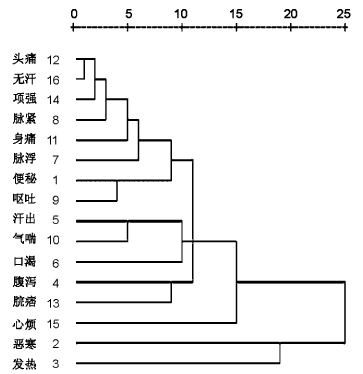
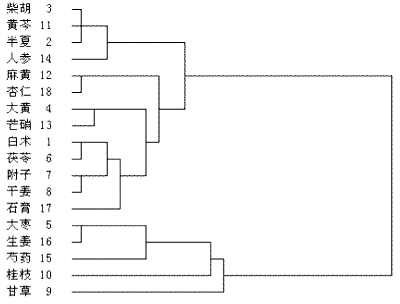
The occurrence rates of main syndromes of Taiyang disease, and the usage frequency of the prescriptions and herbs in its treatment were calculated, and the laws in syndrome differentiation and herbal medication were analyzed by hierarchical clustering analysis.
Results

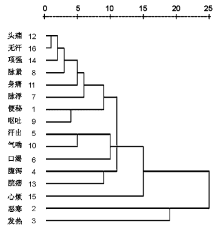
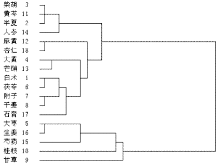
Fever and aversion to cold were found to be the main symptoms of Taiyang disease and usually accompanied with headache, absent sweating, neck stiff, floating and tight pulse, and body ache. The accompanying or aggravated symptoms could be classified into lung system syndrome with the manifestations of sweating and asthma, spleen-deficiency syndrome with the manifestations of gastric fullness and diarrhea, stomach syndrome with vomit and constipation. Guizhi decoction was the main prescription used in the treatment of Taiyang disease. Mahuang (Herba Ephedrae) matching Xingren (Semen Armeniacae), Dahuang (Radix et Rhizoma Rhei) matching Mangxiao (Natrii Sulfas), Baizhu (Rhizoma Atractylodis Macrocephalae) matching Fuling (Poria), Fuzi (Radix Aconiti Lateralis) matching Ganjiang (Rhizoma Zingiberis), Chaihu (Radix Bupleuri) matching Huangqin (Radix Scutellariae), Banxia (Rhizoma Pinelliae), and Renshen (Radix Ginseng) as the main compatibilities were used in treating lung diseases, stomach diseases, spleen-deficiency diseases, kidney-deficiency diseases and Shaoyang diseases respectively.
Conclusion

Exterior syndrome, as a common syndrome in Taiyang disease, is usually treated with Guizhi decoction. The change in syndromes from upper-energizer to lower-energizer in exterior disease can be found from the change of symptoms and the use of herbs. And the development from defending stage to qi stage in exterior disease can be found in the use of prescriptions in Shanghan Lun.

Key words: Shanghan Lun (Treatise on Febrile Diseases), Taiyang disease, Syndrome, Chinese medical formula, Compatibility (TCD), Hierarchical clustering analysis

"

序号 症状 频次 百分率(%) 序号 症状 频次 百分率(%)
1 发热 56 43.75 9 腹泻 14 10.93
2 恶寒 44 34.38 10 无汗 14 10.93
3 汗出 24 18.75 11 身痛 13 10.16
4 脉浮 21 16.41 12 头痛 13 10.16
5 心烦 20 15.63 13 脉紧 10 7.81
6 脘痞 19 14.84 14 气喘 10 7.81
7 呕吐 17 13.28 15 便秘 10 7.81
8 口渴 16 12.50 16 项强 10 7.81

"

"

序号 药物 频次 百分率(%) 序号 药物 频次 百分率(%)
1 甘草 92 71.86 10 大黄 19 14.84
2 桂枝 62 48.44 11 杏仁 16 12.50
3 大枣 59 46.09 12 干姜 14 10.93
4 生姜 56 43.75 13 柴胡 14 10.93
5 芍药 40 31.25 14 芒硝 13 10.16
6 半夏 24 18.75 15 茯苓 13 10.16
7 人参 23 17.97 16 附子 12 9.38
8 黄芩 22 17.19 17 白术 12 9.38
9 麻黄 20 15.63 18 石膏 10 7.81

"

[1] Xiong MQ. Theory on exogenous febrile disease[M]. Beijing: China Press of Traditional Chinese Medicine,2003
熊曼琪 . 伤寒学[M]. 北京: 中国中医药出版社,2003
[2] Liu DZ, Qian CC. Check and comment of Shang Han Lun[M]. Beijing: People's Medical Publishing House,1991
刘渡舟, 钱超尘 . 伤寒论校注[M]. 北京: 人民卫生出版社,1991
[3] Qian CC, Hao WS. Necessarily serial for clinic of traditional Chinese medicine Shang Han Lun[M]. Beijing: People's Medical Publishing House,2005
钱超尘, 郝万山 . 中医临床必读丛书·伤寒论[M]. 北京: 人民卫生出版社,2005
[4] The State Bureau of Technology Supervision. National Standards of People's Republic of China: Syndrome part of terminology of traditional Chinese medicine clinical diagnosis and treatment[M]. Beijing: Standards Press of China,1997
国家技术监督局. 中华人民共和国国家标准·中医临床诊疗术语证候部分[M]. 北京: 中国标准出版社,1997
[5] Deng TT. Diagnostics of traditional Chinese medicine(5th ed)[M]. Shanghai: Shanghai Scientific and Technical Publishers,2002,(5th ed)
邓铁涛 . 中医诊断学(第5版)[M]. 上海: 上海科学技术出版社,2002,(第5版)
[6] Chinese Pharmacopoeia Commission. Pharmacopoeia of the People's Republic of China(Part one).(2000 ed)[M]. Beijing: Chemical Industry Press,2000,(2000 ed)
国家药典委员会. 中华人民共和国药典(一部)(2000年版)[M]. 北京: 化学工业出版社,2000,(2000年版)
[1] Gang Guo, Jian-hua Xu, Jian-hong Han, Fang Liang, Yong Zhang, Qiang Zhang, Jue Sun, Zhong-ze Fan . Chinese herbal decoction Shiquan Dabu Tang inhibits tumor growth and angiogenesis of metastasis after primary tumor surgical removal in mice. Journal of Chinese Integrative Medicine, 2012, 10(4): 436-447.
[2] Jia-jia Wang , Tian-fang Wang , Xiu-yan WU , Yah Zhao , Xiao-lin Xue , Qing-guo Wang. Weighting coefficients of symptoms and signs in the diagnosis of corresponding TCM syndrome elements of ulcerative colitis based on expert questionnaire investigation. Journal of Chinese Integrative Medicine, 2012, 10(4): 398-405.
[3] Xiao-ping Huang , Xiao-dan Liu , Chang-qing Deng . Effects of the combination of active component extracts from Astragalus membranaceus and Panax notoginseng on apoptosis, reactive oxygen species and mitochondrial membrane potential of PC12 cells with oxidative injury. Journal of Chinese Integrative Medicine, 2012, 10(10): 1127-1134.
[4] Han Xiang-hui, Ye Yi-yi, Guo Bao-feng, Liu Sheng. Effects of platycodin D in combination with different active ingredients of Chinese herbs on proliferation and invasion of 4T1 and MDA-MB-231 breast cancer cell lines. Journal of Chinese Integrative Medicine, 2012, 10(1): 67-75.
[5] Patricia Ronan, Nicola Robinson, Dominic Harbinson, Douglas Maclnnes. A case study exploration of the value of acupuncture as an adjunct treatment for patients diagnosed with schizophrenia: Results and future study design. Journal of Chinese Integrative Medicine, 2011, 9(5): 503-514.
[6] Ji-li Yuan, Hua Zhang, Lei Wang, Yan Lin, Xin-cai Hu, Qin Zhang, Ping Liu. Biochemical characteristics of traditional Chinese medicine syndromes and their elements in patients with hepatitis B cirrhosis. Journal of Chinese Integrative Medicine, 2011, 9(4): 374-381.
[7] Da-wei Pan, Li-guo Chen. Mathematical modeling of sign-and-symptom-oriented diagnostic procedure in traditional Chinese medicine based on the analytic hierarchy process: Indications of Guizhi Decoction and its varieties in the Shanghanlun. Journal of Chinese Integrative Medicine, 2011, 9(4): 354-360.
[8] Yong-an Li, Xiao-ling Lu. Translation techniques for explanations of traditional Chinese medicine formula. Journal of Chinese Integrative Medicine, 2011, 9(2): 229-232.
[9] Zhong-ping Li, Yue Su, Hong-yi Shen, Xiao-tian Zhang, Lin Fan. An analysis of subhealth status based on partial least squares. Journal of Chinese Integrative Medicine, 2011, 9(2): 148-152.
[10] Li-ke Guo, Chao-xian Zhang, Xiao-feng Guo. Acupuncture combined with Chinese herbal medicine Plantain and Senna Granule in treatment of functional constipation: A randomized, controlled trial. Journal of Chinese Integrative Medicine, 2011, 9(11): 1206-1214.
[11] Bing Hu, Hong-mei An, Ke-ping Shen, Qin Du. Effects of Tenglong Buzhong Decoction on proliferation and apoptosis of human colon carcinoma cell line LS174T. Journal of Chinese Integrative Medicine, 2010, 8(6): 575-580.
[12] Qi-qi Mao , Xu Sun, Dong-ni Qiu, Xiao-dong Fu, Yi Liu, Wen-jian Wang. Effects of Fufang Jiangzhi No.3 on cholesterol-bile acid metabolism in rabbits with hypercholesterolemia. Journal of Chinese Integrative Medicine, 2010, 8(5): 453-457.
[13] Zhu-ye Gao, Jing-chun Zhang, Hao Xu, Da-zhuo Shi, Chang-geng Fu, Dan Qu, Xue-zhong Zhou. Analysis of relationships among syndrome, therapeutic treatment, and Chinese herbal medicine in patients with coronary artery disease based on complex networks. Journal of Chinese Integrative Medicine, 2010, 8(3): 238-243.
[14] Chang-quan Ling , Yong-hua Su . Possibility and necessity of constructing new nanoformula systems of traditional Chinese medicine. Journal of Chinese Integrative Medicine, 2010, 8(2): 101-105.
[15] Xing-jiang Xiong, Jie Wang. Discussion of related problems in herbal prescription science based on objective indications of herbs. Journal of Chinese Integrative Medicine, 2010, 8(1): 20-24.
Viewed
Full text


Abstract

Cited

  Shared   
  Discussed   
[1] Dong Yang, Yong-ping Du, Qing Shen, Wei Chen, Yan Yu, Guang-lei Chen. Expression of alpha-smooth muscle actin in renal tubulointerstitium in patients with kidney collateral stasis. Journal of Chinese Integrative Medicine, 2008, 6(1): 41-44
[2] Hai-feng Wei, Bai-liu Ya, Ling Zhao, Cui-fei Ye, Li Zhang, Lin Li. Evaluation of tongue manifestation of blood stasis syndrome and its relationship with blood rheological disorder in a rat model of transient brain ischemia. Journal of Chinese Integrative Medicine, 2008, 6(1): 73-76
[3] Xi Lin, Jian-ping Liu. Herbal medicines for viral myocarditis. Journal of Chinese Integrative Medicine, 2008, 6(1): 76
[4] Xi Lin, Jian-ping Liu. Tai chi for treating rheumatoid arthritis. Journal of Chinese Integrative Medicine, 2008, 6(1): 82
[5] Liang-ping Hu, Hui Gao. Discrimination of errors in statistical analysis of medical papers published in the first issue of 2006 in Journal of Chinese Integrative Medicine. Journal of Chinese Integrative Medicine, 2008, 6(1): 98-106
[6] Yan-bo Zhu , Qi Wang, Cheng-yu Wu, Guo-ming Pang, Jian-xiong Zhao, Shi-lin Shen, Zhong-yuan Xia , Xue Yan . Logistic regression analysis on relationships between traditional Chinese medicine constitutional types and overweight or obesity. Journal of Chinese Integrative Medicine, 2010, 8(11): 1023-1035
[7] Wei Xu, Meng Shi, Jian-gang Liu, Cheng-long Wang . Collagen protein expressions in ischemic myocardium of rats with acute myocardial infarction and effects of qi-tonifying, yin-tonifying and blood-activating herbs and detoxifying and blood-activating herbs. Journal of Chinese Integrative Medicine, 2010, 8(11): 1041-1047
[8] Tao Wang , Feng Qin. Effects of Chinese herbal medicine Xiaoyao Powder on monoamine neurotransmitters in hippocampus of rats with postpartum depression. Journal of Chinese Integrative Medicine, 2010, 8(11): 1075-1079
[9] Ying Xu , Chang-chun Zeng , Xiu-yu Cai , Rong-ping Guo , Guang Nie , Ying Jin. Chromaticity and optical spectrum colorimetry of the tongue color in different syndromes of primary hepatic carcinoma. Journal of Chinese Integrative Medicine, 2012, 10(11): 1263-1271
[10] Xiang-ying Mao , Qin Bian , Zi-yin Shen. Analysis of the osteogenetic effects exerted on mesenchymal stem cell strain C3H10T1/2 by icariin via MAPK signaling pathway in vitro. Journal of Chinese Integrative Medicine, 2012, 10(11): 1272-1278
[an error occurred while processing this directive]