[an error occurred while processing this directive]

Journal of Chinese Integrative Medicine ›› 2008, Vol. 6 ›› Issue (1): 60-67.doi: 10.3736/jcim20080112

• Original Experimental Research • Previous Articles     Next Articles

A rat model of pulmonary fibrosis induced by infusing bleomycin quickly through tracheal intubation

Wei Zhang1, Xiang-feng Lu2, Xiao-mei Zhang3, Jian-jun Wu4, Liang-duo Jiang1()   

  1. 1. Department of Respiratory Diseases, Dongzhimen Hospital, Beijing University of Chinese Medicine, Beijing 100700, China
    2. Department of Pathology, Dongzhimen Hospital, Beijing University of Chinese Medicine, Beijing 100700, China
    3. Department of Respiratory Diseases, Dongfang Hospital, Beijing University of Chinese Medicine, Beijing 100078, China
    4. Department of Chinese Medicine, Beijing Royal Integrative Medicine Hospital, Beijing 102209, China
  • Received:2007-04-05 Online:2008-01-20 Published:2008-01-15
  • Contact: JIANG Liang-duo E-mail:liangduojiang@163.com

Objective:To study the approach for developing a rat model of pulmonary fibrosis induced by bleomycin (BLM).

Method:Different doses (7, 6, 5, 3.4, 2, 1 mg/kg) of bleomycin A5-saline were infused into the rats' lung in bleomycin-treated group through tracheal intubation, and rats in sham-operated group were infused with same volume of saline. The living state and lung pathology of the rats were observed. The author deeply studied the condition of the rats in 1 mg/kg bleomycin-treated group, and the changes of body weight and lung pathology were observed. Lung quotient, the content of transforming growth factor β1(TGF-β1)and platelet-derived growth factor (PDGF) in serum were measured on the 14th, 28th and 45th day of the experiment.

Results:The study demonstrated that infusing large doses of bleomycin A5 quickly through tracheal intubation had a high mortality, and infusing 1 mg/kg quickly could successfully develop an animal model of pulmonary fibrosis. Compared with the sham-operated group, fibrosis was appeared obviously in the rats' lung in 1 mg/kg bleomycin A5-treated group after 14 days of experiment, diffuse fibrosis was appeared after 28 days of experiment, and the fibrosis became more severe after 45 days of experiment. The body weight of the rats in bleomycin-treated group was declined after 3, 7 and 14 days of experiment as compared with the sham-operated group (P<0.01). Twenty-one days after the experiment, the body weight was declined too, but there was no significant difference between the bleomycin-treated group and the sham-operated group (P>0.05). Lung quotient was increased 14, 28 and 45 days after the experiment (P<0.01), the level of serum TGF-β1 began to increase since 28 days after the experiment (P<0.05, P<0.01), and the level of serum PDGF also increased gradually 45 days after the experiment (P<0.05). And the mortality rate of 1 mg/kg bleomycin A5-treated group was lower than those of the other doses of bleomycin A5-treated groups.

Conclusion:A rat model of pulmonary fibrosis can be duplicated successfully by infusing 1 mg/kg bleomycin A5 quickly through tracheal intubation.

Key words: pulmonary fibrosis, model, animal, bleomycin, rats

CLC Number: 

  • R521.8
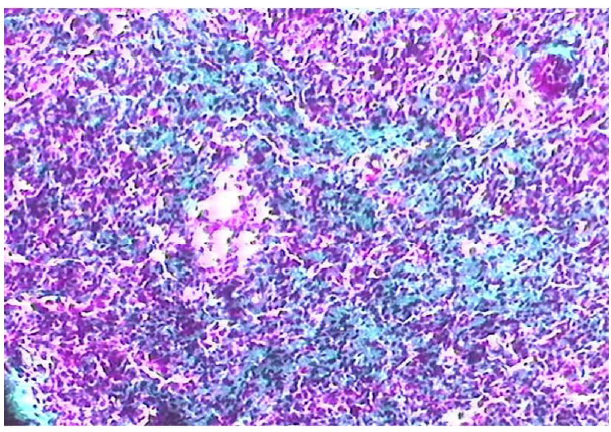
Table 1

Body weight of rats at each time point [$\bar{x}$±s (n), g]"

Group Body weight of rats
Day 0 Day 3 Day 7 Day 14 Day 21 Day 28 Day 35 Day 45
Sham-operated 286±16 (15) 287±20 (15) 319±20 (15) 353±25 (15) 391±33 (10) 421±41 (10) 439±39 (5) 471±45 (5)
BLM-treated 289±15 (25) 268±17 (25)** 285±27 (25)** 316±39 (25)** 362±40 (17) 397±43 (17) 419±51 (9) 448±45 (9)
t 0.542 3.236 4.203 3.275 1.896 1.443 0.786 0.840

Table 2

Lung quotient of rats [$\bar{x}$±s (n)]"

Group Lung quotient of rats
Day 14 Day 28 Day 45
Sham-operated 0.451±0.030 (5) 0.434±0.045 (5) 0.438±0.016 (5)
BLM-treated 0.835±0.264 (8)** 0.726±0.125 (8)** 0.620±0.076 (9)**
t 3.201 5.201 6.914

Table 3

Content of serum TGF-β1 in rats ($\bar{x}$±s, ng/L)"

Group n Content of serum TGF-β1
Day 14 Day 28 Day 45
Sham-operated 5 27.46±5.17 27.62±3.60 27.96±3.69
BLM-treated 8 39.00±14.59 37.76±7.49* 50.73±16.53**
t 2.043 2.797 3.749

Table 4

Content of serum PDGF in rats ($\bar{x}$±s, ng/L)"

Group n Content of serum PDGF
Day 14 Day 28 Day 45
Sham-operated 5 19.52±4.16 18.36±2.76 19.27±8.30
BLM-treated 8 21.56±5.24 23.53±5.82 30.78±6.33*
t 0.731 1.839 2.838

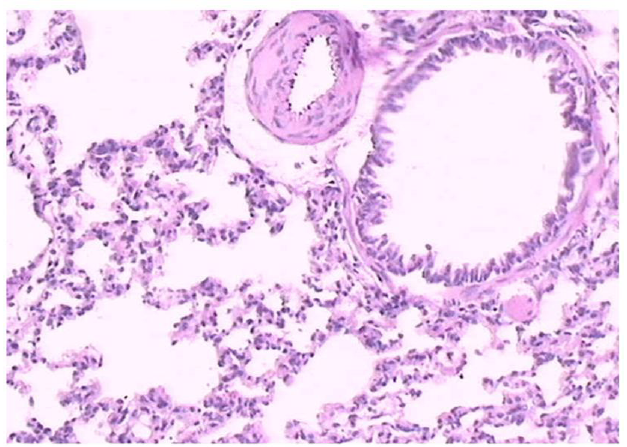
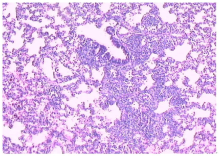
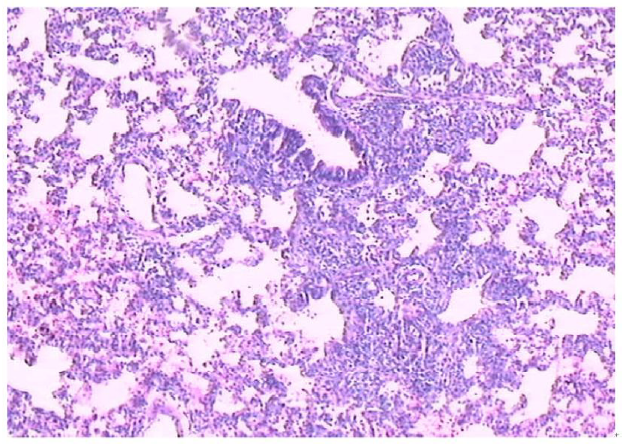
Figure 1

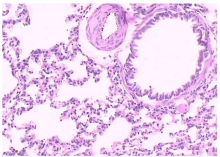
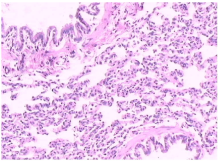
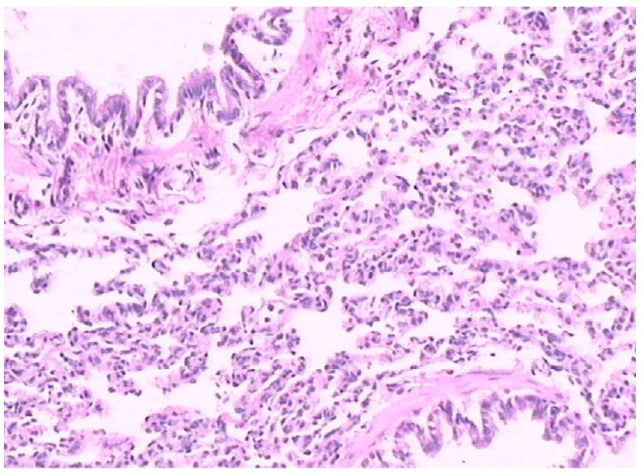
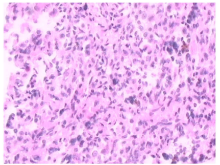
Lung tissue pathology in sham-operated group (HE staining, ×100) The structure of lung was clear. There were no inflammatory cells in alveolar septum, and there were no inflammatory exudates in bronchial lumen and alveolar space."

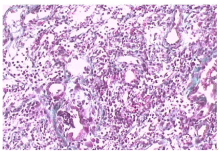
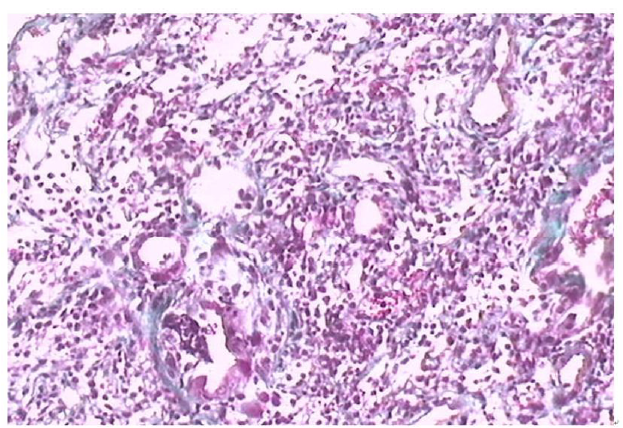
Figure 2

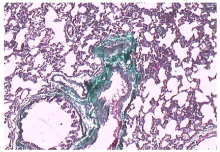
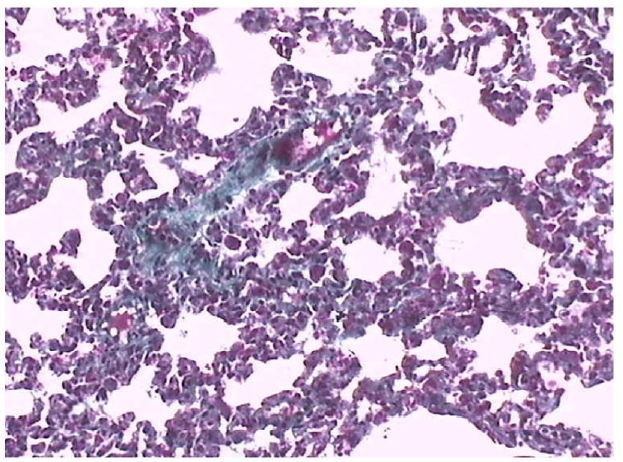
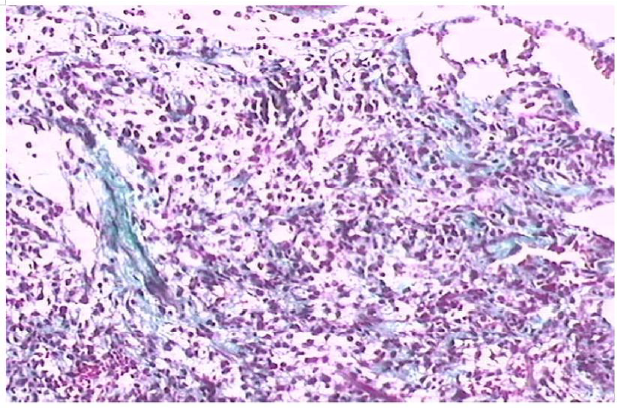
Lung tissue pathology in sham-operated group (Masson staining, ×100) No pulmonary fibrosis was found."

Figure 3

Lung tissue pathology in BLM-treated group at 24 h of experiment (HE staining, ×100)"

Figure 4

Lung tissue pathology in BLM-treated group at 48 h of experiment (Masson staining, ×100)"

Figure 5

Lung tissue pathology in BLM-treated group on the 7th day of experiment (HE staining, ×100) The inflammation and fibroblast focuses were formed."

Figure 6

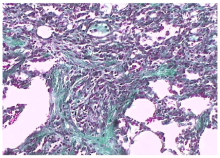
Lung tissue pathology in BLM-treated group on the 8th day of experiment (Masson staining, ×100) Deposit of collagen fibers could be seen."

Figure 7

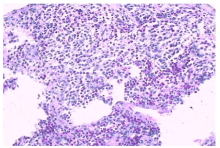
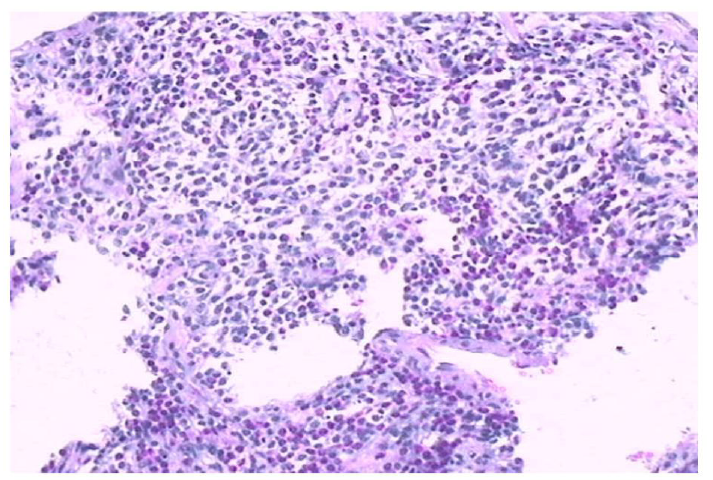
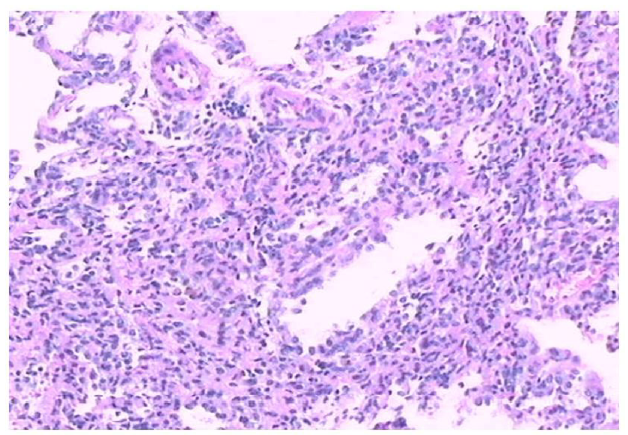
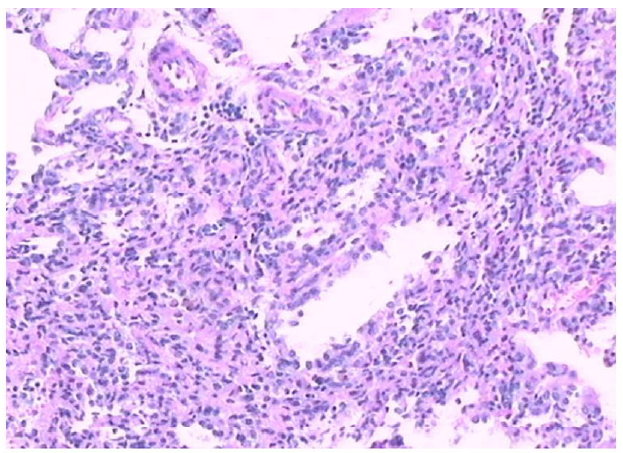
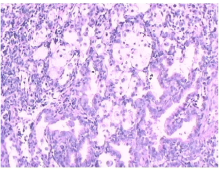
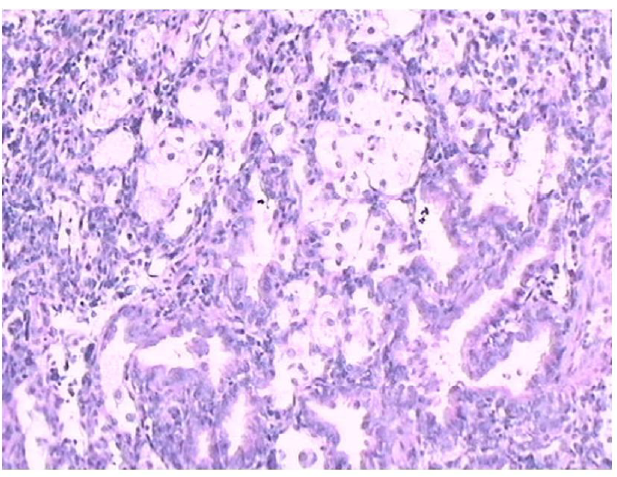
Lung tissue pathology in BLM-treated group on the 14th day of experiment (HE staining, ×100) A great quantity of inflammatory cells could be seen in parts of the lung, and most of them were lymphocytes and eosinophile granulocytes."

Figure 8

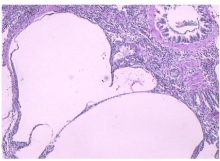
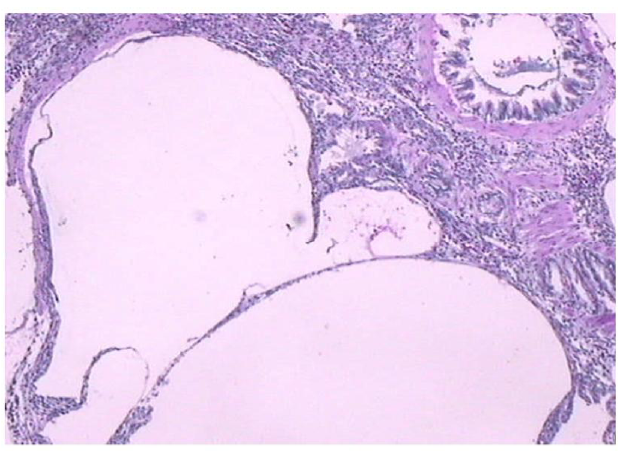
Lung tissue pathology in BLM-treated group on the 14th day of experiment (HE staining, ×40) Inequality of cyst-like fiber air space could be seen in parts of the lung, i.e. the formation of honeycomb lung."

Figure 9

Lung tissue pathology in BLM-treated group on the 14th day of experiment (HE staining, ×100) Unequal deposit of collagen fibers in fibrosis area."

Figure 10

Lung tissue pathology in BLM-treated group on the 14th day of experiment (HE staining, ×200) Small amount of inflammatory cells in fibrosis area, and proliferation of typeⅡ alveolar epithelium could be seen."

Figure 11

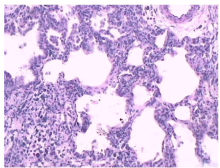
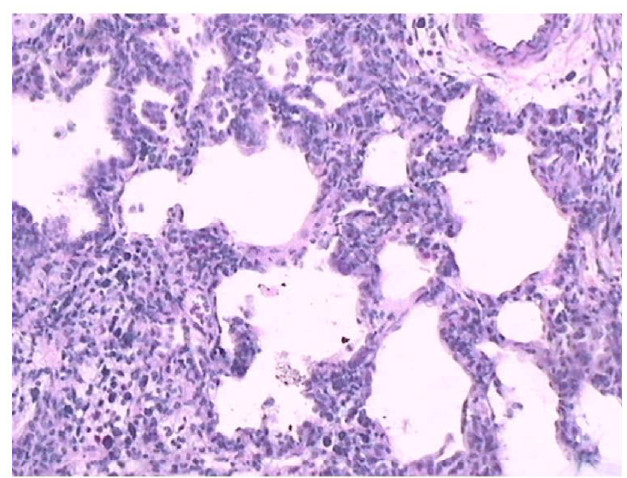
Lung tissue pathology in BLM-treated group on the 28th day of experiment (HE staining, ×100) Obvious aggregation of macrophages in alveoli."

Figure 12

Lung tissue pathology in BLM-treated group on the 28th day of experiment (HE staining, ×100) Compared with lung tissue pathology on the 14th day of experiment, there were more cyst-like fiber air spaces."

Figure 13

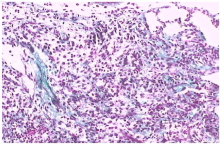
Lung tissue pathology in BLM-treated group on the 14th day of experiment (Masson staining, ×100) Obvious fibrosis could be seen in parts of the lung."

Figure 14

Lung tissue pathology in BLM-treated group on the 28th day of experiment (Masson staining, ×100) The pulmonary fibrosis was more serious than that on the 14th day of experiment."

Figure 15

Lung tissue pathology in BLM-treated group on the 45th day of experiment (HE staining, ×200) Less inflammatory cells in fibrosis area and quantity of fibroblasts and collagen fibers could be seen."

Figure 16

Lung tissue pathology in BLM-treated group on the 45th day of experiment (Masson staining, ×200) The fibrosis was more serious than that on the 28th day of the experiment."

[1] American Thoracic Society/European Respiratory Society International Multidisciplinary Consensus Classification of the Idiopathic Interstitial Pneumonias. This joint statement of the American Thoracic Society (ATS) , and the European Respiratory Society (ERS) was adopted by the ATS board of directors, June 2001 and by the ERS Executive Committee, June 2001. Am J Respir Crit Care Med. 2002; 165(2):277-304.
doi: 10.1164/ajrccm.165.2.ats01
[2] Yi XH. ATS/ERS classification and pathologic diagnosis of idiopathic interstitial pneumonia. Zhen Duan Bing Li Xue Za Zhi. 2005; 12(6):401-404. Chinese.
doi: 10.3969/j.issn.1007-8096.2005.06.001
易祥华 . 介绍特发性间质性肺炎的ats/ers分类及病理诊断.诊断病理学杂志. 2005; 12(6):401-404.
doi: 10.3969/j.issn.1007-8096.2005.06.001
[3] Adamson IY, Bowden DH . The pathogenesis of bleomycin-induced pulmonary fibrosis in mice. Am J Pathol. 1974; 77(2):185-197.
pmid: 4141224
[4] Thall RS, Barton RW, Damato DA , et al. Differential cellular analysis of bronchoalveolar lavage fluid obtained at various stages during the development of bleomycin- induced pulmonary fibrosis in the rat. Am Rev Respir Dis. 1982; 126(3):488-492.
[5] Ludwicka A, Ohha T, Trojanowska M , et al. Elevated levels of platelet derived growth factor and transforming growth factor-beta 1 in bronchoalveolar lavage fluid from patients with scleroderma. J Rheumatol. 1995 ; 22(10):1876-1883.
[6] Yoshida M, Sakuma J, Hayashi S , et al. A histologically distinctive interstitial pneumonia induced by overexpression of the interleukin 6, transforming growth factor beta 1,or platelet-derived growth factor B gene. Proc Natl AcadSciUSA. 1995; 92(21):9570-9574.
doi: 10.1073/pnas.92.21.9570
[7] Sime PJ, Xing Z, Graham FL , et al. Adenovector- mediated gene transfer of active transforming growth factor-beta 1 induces prolonged severe fibrosis in rat lung. J Clin Invest. 1997; 100(4):768-776.
[8] Lee CG, Cho SJ, Kang MJ , et al. Early growth response gene 1-mediated apoptosis is essential for transforming growth factor beta 1-induced pulmonary fibrosis. J Exp Med. 2004; 200(3):377-389.
[1] Na Wu , Lu Song , Xin-xin Yang, Jiang-lei Wei , Zhen-guo Liu. Effects of Chinese herbal medicine Tianqi Pingchan Granule on G protein-coupled receptor kinase 6 involved in the prevention of levodopa-induced dyskinesia in rats with Parkinson disease. Journal of Chinese Integrative Medicine, 2012, 10(9): 1018-1024.
[2] Lawrence A. Olatunji, Taofeek O. Usman, Joseph O. Adebayo, Victoria A. Olatunji . Effects of aqueous extract of Hibiscus sabdariffa on renal Na+-K+-ATPase and Ca2+-Mg2+-ATPase activities in Wistar rats. Journal of Chinese Integrative Medicine, 2012, 10(9): 1049-1055.
[3] Zhao-lan Liu, Qing Li , Yu-jie Mu , Ying Gao, Jian-ping Liu. Using nested case-control study to appraise the effectiveness of Chinese medicines in the treatment of diabetic nephropathy. Journal of Chinese Integrative Medicine, 2012, 10(9): 991-996.
[4] Dhirender Kaushik, Ajay Kumar, Pawan Kaushik, Avatar C. Rana. Anticonvulsant activity of alcoholic extract of bark of Pinus roxburghii Sarg. Journal of Chinese Integrative Medicine, 2012, 10(9): 1056-1060.
[5] Chan Chen, Chang-xun Chen, Xi-min Wu, Rui Wang, Yi-ming Li. Effects of extracts of Radix Scrophulariae on blood pressure in spontaneously hypertensive rats and the underlying mechanisms. Journal of Chinese Integrative Medicine, 2012, 10(9): 1009-1017.
[6] Jian-sheng Li, Ya Li, Su-yun Li, Yuan-yuan Wang, Li Deng, Yan-ge Tian, Su-li Jiang , Ying Wang. Long-term effects of Tiaobu Feishen therapies on systemic and local inflammation responses in rats with stable chronic obstructive pulmonary disease. Journal of Chinese Integrative Medicine, 2012, 10(9): 1039-1048.
[7] Karuna A. Talpate, Uma A. Bhosale, Mandar R. Zambare. Clitorea ternatea, a herb from Indian folklore, improves streptozotocin-induced diabetes and diabetes-induced cognitive decline in rats. Journal of Chinese Integrative Medicine, 2012, 10(8): 939-947.
[8] Samuel Joshua Pragasam, Vachana Murunikara, Evan Prince Sabina, Mahaboobkhan Rasool. Antiperoxidative potential of p-coumaric acid, a common dietary phenol, in adjuvant-induced arthritis in rats. Journal of Chinese Integrative Medicine, 2012, 10(8): 932-938.
[9] Zi-hui Li, Jian Wang, Rong-lin Cai, You-wen Wang, Jian-peng Hu. Establishment and evaluation of a rat model of ulcerative colitis with syndrome of dampness stagnancy due to spleen deficiency. Journal of Chinese Integrative Medicine, 2012, 10(8): 918-924.
[10] Meng Li, Ling Hu, Rong-lin Cai, Zi-jian Wu, Ke-ming Wang. Effects of electro-acupuncture at PC6 and BL15 on nerve electrical activity in spinal dorsal root and norepinephrine and dopamine contents in paraventricular nucleus of hypothalamus in rats with acute myocardial ischemia. Journal of Chinese Integrative Medicine, 2012, 10(8): 874-879.
[11] Hong Wang , Jing-tian Ou , Xin Zhao , Ying Guoz , Hao-ping Mao. Vasodilator effect of oroxylin A on thoracic aorta isolated from rats. Journal of Chinese Integrative Medicine, 2012, 10(8): 880-885.
[12] Xin-min Li, Hui Chen, Yan-yan Ren, Yan-li Lu. Effects of Chinese herbal medicine Xifeng Capsule on multidrug resistance-associated protein 1 expression in hippocampus and cortex of rats with lithium-pilocarpine-induced epilepsy. Journal of Chinese Integrative Medicine, 2012, 10(8): 911-917.
[13] C. Mouli Kalla, Vijaya Tartte, Dattatreya Rao Sirpurkar. Effectiveness of flavonoid-rich leaf extract of Acalypha indica in reversing experimental myocardial ischemia: biochemical and histopathological evidence. Journal of Chinese Integrative Medicine, 2012, 10(7): 784-792.
[14] Feng Xin-ying, Zhu Min, Zhang Qi-qi, Chen Yi-ping, Li Wen-wei. Selective protection of nigral dopaminergic neurons by echinacoside in a rat model of Parkinson disease induced by rotenone. Journal of Chinese Integrative Medicine, 2012, 10(7): 777-783.
[15] Chuan Chen, Hui-ying Chi, Zhi-hua Yu, Jiu-lin Chen . Effects of Chinese herbal medicine Shoushen Granule on telomere length and telomerase activity of peripheral white blood cells and vascular cells in rats with atherosclerosis. Journal of Chinese Integrative Medicine, 2012, 10(6): 667-673.
Viewed
Full text


Abstract

Cited

  Shared   
  Discussed   
[1] Dong Yang, Yong-ping Du, Qing Shen, Wei Chen, Yan Yu, Guang-lei Chen. Expression of alpha-smooth muscle actin in renal tubulointerstitium in patients with kidney collateral stasis. Journal of Chinese Integrative Medicine, 2008, 6(1): 41-44
[2] Hai-feng Wei, Bai-liu Ya, Ling Zhao, Cui-fei Ye, Li Zhang, Lin Li. Evaluation of tongue manifestation of blood stasis syndrome and its relationship with blood rheological disorder in a rat model of transient brain ischemia. Journal of Chinese Integrative Medicine, 2008, 6(1): 73-76
[3] Xi Lin, Jian-ping Liu. Herbal medicines for viral myocarditis. Journal of Chinese Integrative Medicine, 2008, 6(1): 76
[4] Xi Lin, Jian-ping Liu. Tai chi for treating rheumatoid arthritis. Journal of Chinese Integrative Medicine, 2008, 6(1): 82
[5] Liang-ping Hu, Hui Gao. Discrimination of errors in statistical analysis of medical papers published in the first issue of 2006 in Journal of Chinese Integrative Medicine. Journal of Chinese Integrative Medicine, 2008, 6(1): 98-106
[6] Yan-bo Zhu , Qi Wang, Cheng-yu Wu, Guo-ming Pang, Jian-xiong Zhao, Shi-lin Shen, Zhong-yuan Xia , Xue Yan . Logistic regression analysis on relationships between traditional Chinese medicine constitutional types and overweight or obesity. Journal of Chinese Integrative Medicine, 2010, 8(11): 1023-1035
[7] Wei Xu, Meng Shi, Jian-gang Liu, Cheng-long Wang . Collagen protein expressions in ischemic myocardium of rats with acute myocardial infarction and effects of qi-tonifying, yin-tonifying and blood-activating herbs and detoxifying and blood-activating herbs. Journal of Chinese Integrative Medicine, 2010, 8(11): 1041-1047
[8] Tao Wang , Feng Qin. Effects of Chinese herbal medicine Xiaoyao Powder on monoamine neurotransmitters in hippocampus of rats with postpartum depression. Journal of Chinese Integrative Medicine, 2010, 8(11): 1075-1079
[9] Ying Xu , Chang-chun Zeng , Xiu-yu Cai , Rong-ping Guo , Guang Nie , Ying Jin. Chromaticity and optical spectrum colorimetry of the tongue color in different syndromes of primary hepatic carcinoma. Journal of Chinese Integrative Medicine, 2012, 10(11): 1263-1271
[10] Xiang-ying Mao , Qin Bian , Zi-yin Shen. Analysis of the osteogenetic effects exerted on mesenchymal stem cell strain C3H10T1/2 by icariin via MAPK signaling pathway in vitro. Journal of Chinese Integrative Medicine, 2012, 10(11): 1272-1278
[an error occurred while processing this directive]