[an error occurred while processing this directive]

Journal of Chinese Integrative Medicine ›› 2005, Vol. 3 ›› Issue (2): 154-159.doi: 10.3736/jcim20050220

• Lecture • Previous Articles     Next Articles

Key foundational science problem in experimental medicine study of Chinese materia medica: Ascertainment of active and toxic constituents from Chinese materia medica

Xiu-wei Yang   

  1. State Key Laboratory of Natural & Biomimetic Drugs, School of Pharmaceutical Sciences, Medical and Health Analysis Center, Peking University, Beijing 100083, China
  • Received:2004-11-20 Online:2005-03-20 Published:2005-03-20
  • Contact: Xiu-wei Yang E-mail:xwyang@bjmu.edu.cn

The problem on study of the active and toxic constituents of Chinese materia medica is the core of the problems in the field of modern research of Chinese materia medica. But approved methods for ascertaining the active and toxic constituents in Chinese materia medica have not been developed yet and are in developing phases. In combination with the characteristics of Chinese materia medica in clinical use and the achievements of modern pharmaceutical research, series model may be a finer approach to make certain of the active and toxic constituents from Chinese materia medica, which includes the parent compound biotransformation by human intestinal bacteria to make biotransformation products, and the absorption and further biotransformation in intestinal wall, the metabolization in the liver, and the secretion by the kidney of the parent compounds and biotransformation products. This method is also an important research assignment in the field of experimental medicine study of Chinese materia medica.

Key words: Chinese materia medica, Active constituent, Toxic constituent, Experimental medicine of Chinese materia medica

CLC Number: 

  • R285.5

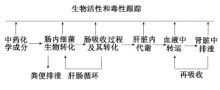
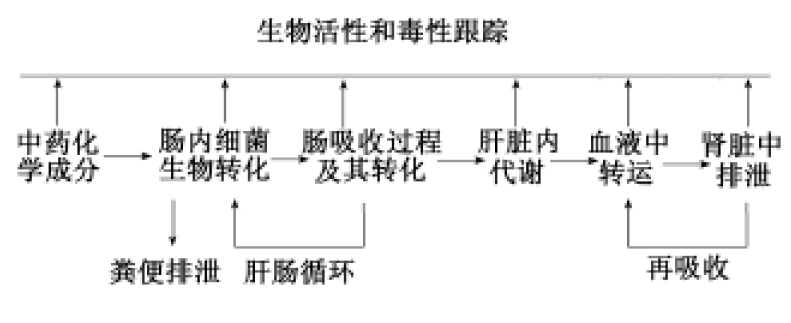
Fig 1

A series model to ascertain the active and toxic constituents based on the behavior of chemical constituents of Chinese materia medica in human"

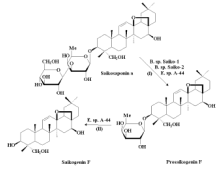
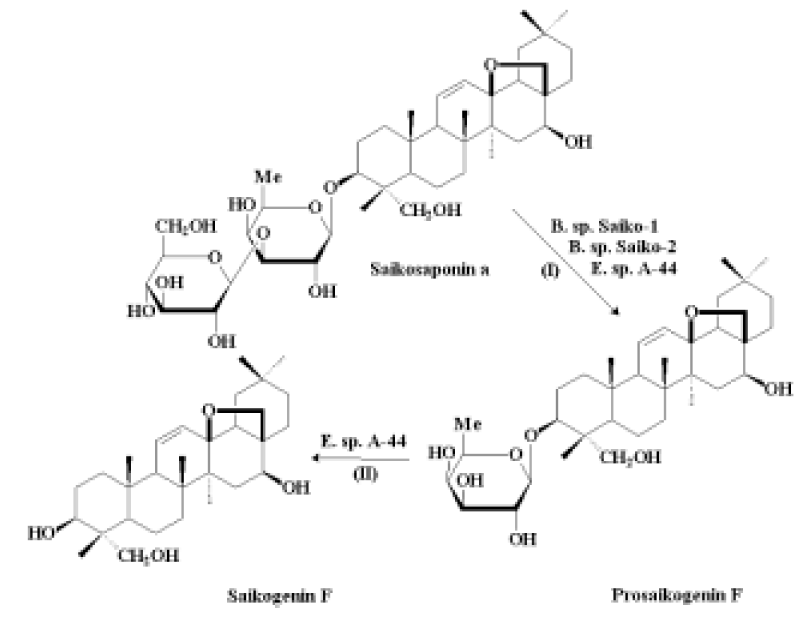
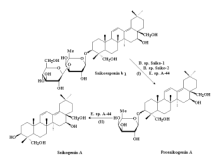
Fig 2

Biotransformation pathways of saikosaponin-a by human intestinal bacteria"

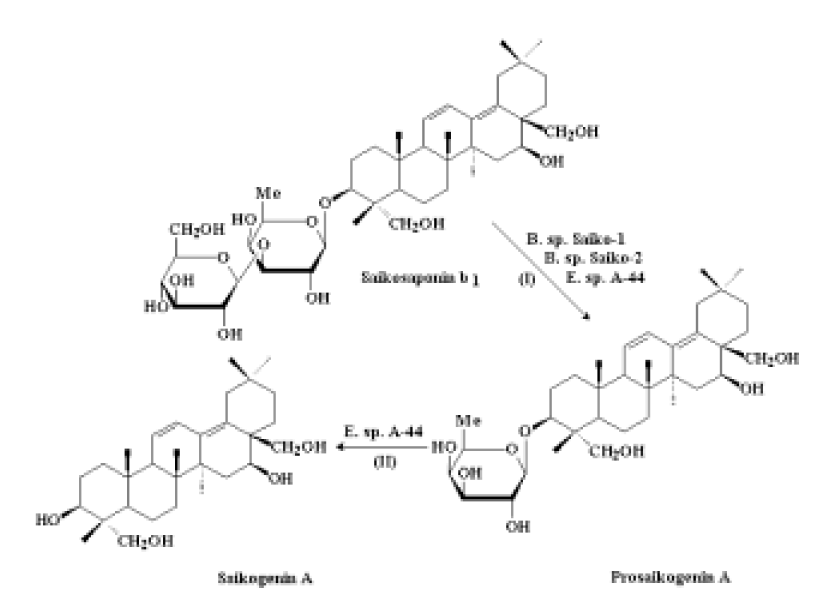
Fig 3

Biotransformation pathways of saikosaponin-b1 by human intestinal bacteria"

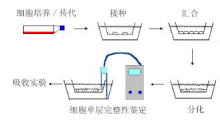
Fig 4

Preparation process of Caco-2 cell monolayers"

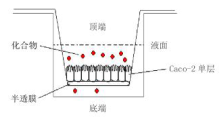
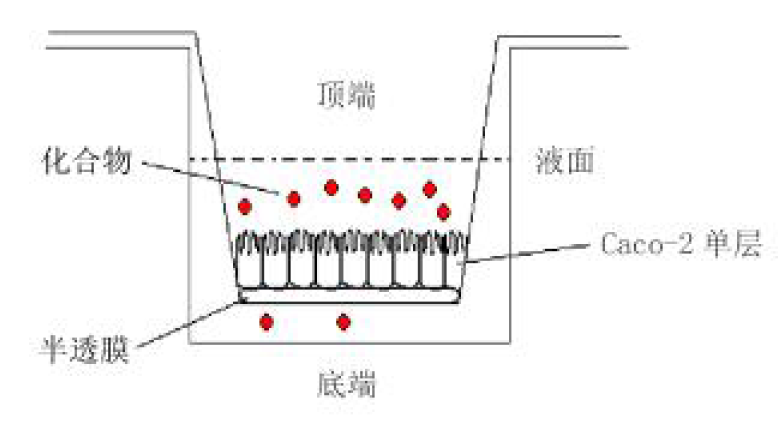
Fig 5

Illustration of transwell and transport test"

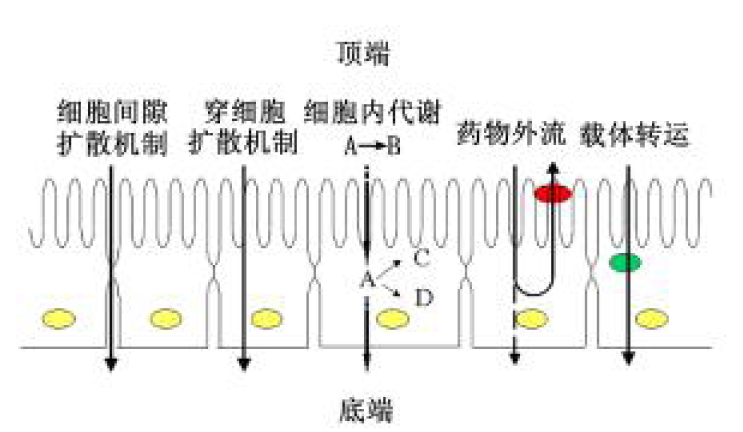
Fig 6

Absorption and transport mechanism of parental compound and its biotransformed products by huma intestinal bacteria in intestine"

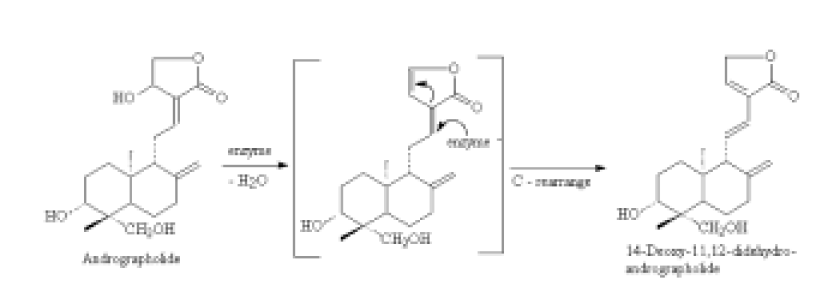
Fig 7

Biotransformation pathways of andrographolide by human intestinal bacteria"

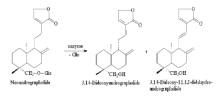
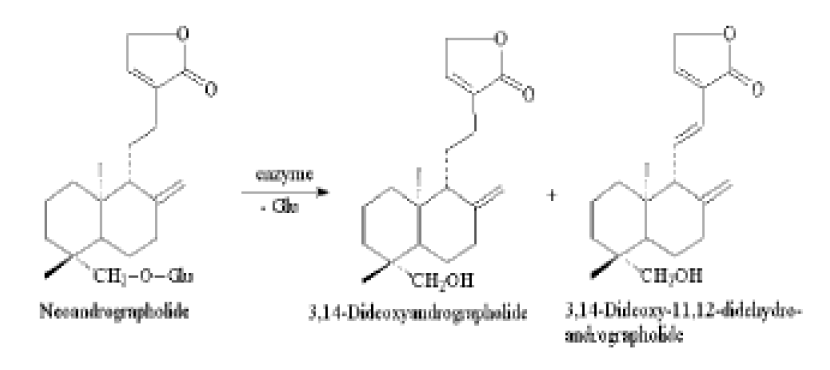
Fig 8

Biotransformation pathways of neoandrographolide by human intestinal bacteria"

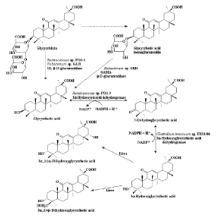
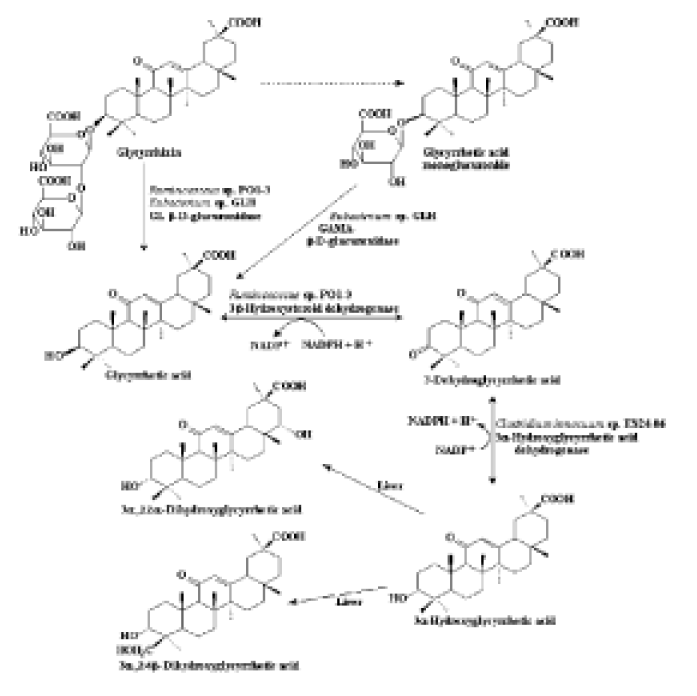
Fig 9

Biotransformation pathways of glycyrrhizin"

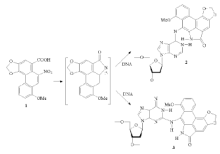
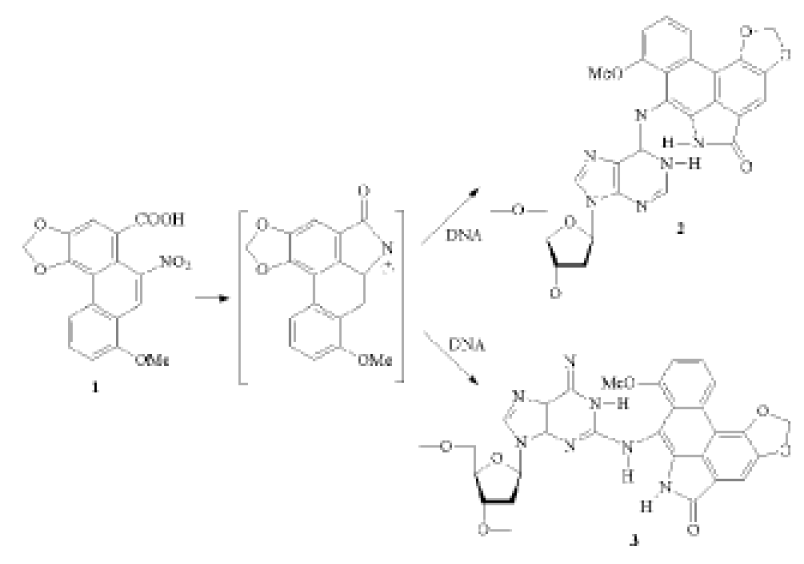
Fig 10

Aristolactam I-DNA adducts 1: aristolochic acid I; 2: 7-(deoxyadenosin-N6-yl) aristolactam I; 3: 7-(deoxyguanosin-N2-yl) aristolactam I"

[1] 杨秀伟 . 天然药物化学发展的历史性变迁[J]. 北京大学学报 (医学版), 2004,36(1):9-11
[2] 杨秀伟, 郝美荣, 服部征雄 . 中药成分代谢分析(第1版)[M]. 北京: 中国医药科技出版社,2003,(第1版):8-11, 143-151, 413- 436, 437-472
[3] 王夔 . 中药研究现代方法学(第1版)[M]. 北京: 化学工业出版社,2004,(第1版):7- 22, 112-119
[4] 杨秀伟 . 中药复杂体系科学问题研究[A]. 见:药学前沿(2003年卷)[M]. 北京: 中国医药科技出版社, 2003. 396-447
[5] Arlt VM, Stiborova M, Schmeiser HH . Aristolochic acid as a probable human cancer hazard in herbal remedies: a review[J]. Mutagenesis, 2002,17(4):265-277
doi: 10.1093/mutage/17.4.265 pmid: 12110620
[6] Harris JW, Rahman A, Kim BR , et al. Metabolism of taxol by human hepatic microsomes and liver slices: participation of cytochrome P450 3A4 and an unknown P450 enzyme[J]. Cancer Res, 1994,54(15):4026-4035
[7] 杨秀伟, 杨晓达, 蒲小平 , 等. 创新药物研究中的吸收、分布、代谢、排泄/毒性(ADME/Tox.)平台建设[J]. 北京大学学报 (医学版), 2004,36(1):5-8
[8] 宋军, 陈可冀 . 循证医学的反思[J]. 中国中西医结合杂志, 2004,24(6):485-487
doi: 10.7661/CJIM.2004.6.485
[1] Na Wu , Lu Song , Xin-xin Yang, Jiang-lei Wei , Zhen-guo Liu. Effects of Chinese herbal medicine Tianqi Pingchan Granule on G protein-coupled receptor kinase 6 involved in the prevention of levodopa-induced dyskinesia in rats with Parkinson disease. Journal of Chinese Integrative Medicine, 2012, 10(9): 1018-1024.
[2] Xin-min Li, Hui Chen, Yan-yan Ren, Yan-li Lu. Effects of Chinese herbal medicine Xifeng Capsule on multidrug resistance-associated protein 1 expression in hippocampus and cortex of rats with lithium-pilocarpine-induced epilepsy. Journal of Chinese Integrative Medicine, 2012, 10(8): 911-917.
[3] Yong Zhang, Xiao-wen Sun, Jian-hua Xu, Hai Lu, Zhong-ze Fan, Jue Sun, Xiao-xiao Zhang. Effects of medicated serum prepared with Chinese herbal medicine Changweiqing on pharmacokinetics of oxaliplatin in colon cancer cells. Journal of Chinese Integrative Medicine, 2012, 10(8): 901-910.
[4] Wei-hua Xu, Ze-huai Wen, Wei-xiong Liang, Qi Wang. A review of research on the development of instruments for therapeutic efficacy evaluation of traditional Chinese medicine. Journal of Chinese Integrative Medicine, 2012, 10(7): 726-737.
[5] Lin Wang, Guan-liang Wang, Jia-han Liu, Di Li, De-zeng Zhu, Liang-neng Wu . Effects of ursolic acid in ameliorating insulin resistance in liver of KKAy mice via peroxisome proliferator-activated receptors α and γ. Journal of Chinese Integrative Medicine, 2012, 10(7): 793-799.
[6] Yu-ting Yin, Xiao-wan Li , Yang Dong , Jian-rong Shi. Research progress in biological basis of cold and heat essence of Chinese medicine. Journal of Chinese Integrative Medicine, 2012, 10(12): 1328-1335.
[7] Rui Jin , Bing Zhang . A complexity analysis of Chinese herbal property theory: The multiple expressions of herbal property (Part 2). Journal of Chinese Integrative Medicine, 2012, 10(12): 1321-1327.
[8] Rui Jin, Bing Zhang. A complexity analysis of Chinese herbal property theory: the multiple formations of herbal property (Part 1). Journal of Chinese Integrative Medicine, 2012, 10(11): 1198-1205.
[9] Jie-ning Wang, Sheng Ye, Dong-hai Yu, Hui Zhao, Le-yi Du. Practice and exploration on clinical evaluations of hospital-made Chinese herbal formulas in the Pudong New Area of Shanghai. Journal of Chinese Integrative Medicine, 2012, 10(10): 1084-1087.
[10] Xiao-ping Huang , Xiao-dan Liu , Chang-qing Deng . Effects of the combination of active component extracts from Astragalus membranaceus and Panax notoginseng on apoptosis, reactive oxygen species and mitochondrial membrane potential of PC12 cells with oxidative injury. Journal of Chinese Integrative Medicine, 2012, 10(10): 1127-1134.
[11] Rui Jin, Bing Zhang , Xiao-qing Liu , Chun-miao Xue , Qian Zhang, Lian-zhen Li, Qian Zhao, Kang Li . A theoretical and experimental study on the Fuzzy evaluation model of biological performance of Chinese materia medica with an either cold or hot herbal property. Journal of Chinese Integrative Medicine, 2012, 10(10): 1106-1119.
[12] Han Xiang-hui, Ye Yi-yi, Guo Bao-feng, Liu Sheng. Effects of platycodin D in combination with different active ingredients of Chinese herbs on proliferation and invasion of 4T1 and MDA-MB-231 breast cancer cell lines. Journal of Chinese Integrative Medicine, 2012, 10(1): 67-75.
[13] Ng Cui-shan, Wang Shan-ping, Cheong Jun-long, Wu Yu-dan, Jia Yong-liang, Leung Siu-wai. Systematic review and meta-analysis of randomized controlled trials comparing Chinese patent medicines Compound Danshen Dripping Pills and Di’ao Xinxuekang in treating angina pectoris. Journal of Chinese Integrative Medicine, 2012, 10(1): 25-34.
[14] Qian Zhang, Bing Zhang, Rui Jin, Lian-zhen Li, Qian Zhao, Xiao-qing Liu. Pharmacological effects of Oleum Cinnamomi and water extract of Cortex Cinnamomi in rats with yang-deficiency cold syndrome and the mathematical analysis. Journal of Chinese Integrative Medicine, 2011, 9(9): 983-990.
[15] Li-li Yang, Miao Wang, Tao Liu, Hai-yan Song, Dong-fei Li, Pei-yong Zheng, Ping Liu, Guang Ji. Effects of Chinese herbal medicine Jiangzhi Granule on expressions of liver X receptor α and sterol regulatory element-binding protein-1c in a rat model of non-alcoholic fatty liver disease. Journal of Chinese Integrative Medicine, 2011, 9(9): 998-1004.
Viewed
Full text


Abstract

Cited

  Shared   
  Discussed   
[1] Dong Yang, Yong-ping Du, Qing Shen, Wei Chen, Yan Yu, Guang-lei Chen. Expression of alpha-smooth muscle actin in renal tubulointerstitium in patients with kidney collateral stasis. Journal of Chinese Integrative Medicine, 2008, 6(1): 41-44
[2] Hai-feng Wei, Bai-liu Ya, Ling Zhao, Cui-fei Ye, Li Zhang, Lin Li. Evaluation of tongue manifestation of blood stasis syndrome and its relationship with blood rheological disorder in a rat model of transient brain ischemia. Journal of Chinese Integrative Medicine, 2008, 6(1): 73-76
[3] Xi Lin, Jian-ping Liu. Herbal medicines for viral myocarditis. Journal of Chinese Integrative Medicine, 2008, 6(1): 76
[4] Xi Lin, Jian-ping Liu. Tai chi for treating rheumatoid arthritis. Journal of Chinese Integrative Medicine, 2008, 6(1): 82
[5] Liang-ping Hu, Hui Gao. Discrimination of errors in statistical analysis of medical papers published in the first issue of 2006 in Journal of Chinese Integrative Medicine. Journal of Chinese Integrative Medicine, 2008, 6(1): 98-106
[6] Yan-bo Zhu , Qi Wang, Cheng-yu Wu, Guo-ming Pang, Jian-xiong Zhao, Shi-lin Shen, Zhong-yuan Xia , Xue Yan . Logistic regression analysis on relationships between traditional Chinese medicine constitutional types and overweight or obesity. Journal of Chinese Integrative Medicine, 2010, 8(11): 1023-1035
[7] Wei Xu, Meng Shi, Jian-gang Liu, Cheng-long Wang . Collagen protein expressions in ischemic myocardium of rats with acute myocardial infarction and effects of qi-tonifying, yin-tonifying and blood-activating herbs and detoxifying and blood-activating herbs. Journal of Chinese Integrative Medicine, 2010, 8(11): 1041-1047
[8] Tao Wang , Feng Qin. Effects of Chinese herbal medicine Xiaoyao Powder on monoamine neurotransmitters in hippocampus of rats with postpartum depression. Journal of Chinese Integrative Medicine, 2010, 8(11): 1075-1079
[9] Ying Xu , Chang-chun Zeng , Xiu-yu Cai , Rong-ping Guo , Guang Nie , Ying Jin. Chromaticity and optical spectrum colorimetry of the tongue color in different syndromes of primary hepatic carcinoma. Journal of Chinese Integrative Medicine, 2012, 10(11): 1263-1271
[10] Xiang-ying Mao , Qin Bian , Zi-yin Shen. Analysis of the osteogenetic effects exerted on mesenchymal stem cell strain C3H10T1/2 by icariin via MAPK signaling pathway in vitro. Journal of Chinese Integrative Medicine, 2012, 10(11): 1272-1278
[an error occurred while processing this directive]