[an error occurred while processing this directive]

Journal of Chinese Integrative Medicine ›› 2007, Vol. 5 ›› Issue (3): 287-297.doi: 10.3736/jcim20070312

• Original Experimental Research • Previous Articles     Next Articles

Effects of Chinese herbal recipe Weichang'an in inducing apoptosis and related gene expression in human gastric cancer grafted onto nude mice

Ai-guang Zhao1,2, Jin-kun Yang1, Sheng-fu You1, Ting Li1, Hai-lei Zhao1, Ying Gu1, Lai-di Tang1, Jia-xin Qiu1   

  1. 1 Department of Oncology , Longhua Hospital ,Shanghai University of Traditional Chinese Medicine , Shanghai 200032 ,China
    2E-institutes of Shanghai Municipal Education Commission , Shanghai University of Traditional Chinese Medicine , Shanghai 200032 ,China
  • Online:2007-05-31 Published:2007-05-15

Objective: To investigate the mechanism of Chinese herbal recipe Weichang'an (WCA) in inducing cell apoptosis of human gastric cancer grafted onto nude mice.Methods: The high performance liquid chromatography was used for monitoring the stability of WCA. A human gastric cancer cell line SGC-7901 grafted in nude mouse was used as the animal model. The mice were divided into untreated group and two experimental groups. Animals in the two experimental groups received either WCA over a 34-day period or 5-fluorouracil (5-FU) over a 6-day period starting at the 8th day after grafting. Animals in the untreated group received normal saline on an identical schedule. Animals were killed 41 days after being grafted. To assess the effect of the treatment on tumor, the tumor weight was determined by the electron balance immediately after the animals were killed. SP immunohistochemical method was used to detect the expression of proliferating cell nuclear antigen (PCNA) in grafts. Apoptotic indices (AI) of the tumor cells were examined by terminal deoxynucleotidyl transferase-mediated deoxyuridine triphosphate fluorescence nick end labeling (TUNEL) method. SP method was also used to detect the expressions of cleaved caspase-3, caspase-8 and caspase-9. SYBR green dye I real-time quantitative polymerase chain reaction (RT-PCR) was used to assess the related gene alterations in mRNA level. The expressions of phospho-Stat3 (Tyr705) and bcl-2 proteins were detected by using SP method.Result: Compared with the untreated group, tumor growth was significantly inhibited by treatment of WCA or 5-FU (P<0.01, respectively). The tumor inhibition rate in the WCA-treated group was 48.70% and that in the 5-FU-treated group was 60.10%. The average labeling index (LI) for PCNA in the WCA-treated group and 5-FU-treated group was significantly decreased as compared with that in the untreated group, respectively. The AI of human gastric cancer grafted in the nude mice detected by using TUNEL method was significantly increased to (9.72±4.51)% in the WCA-treated group, while it was (2.45±1.37) % in the untreated group. 5-FU-treated group was also found a significantly increased AI compared with the untreated group. The expressions of cleaved caspase-3 and caspase-9 in the WCA-treated group and 5-FU-treated group were significantly increased as compared with those in the untreated group. But caspase-8 showed no significant alteration either in the WCA-treated group or in the 5-FU-treated group. The expression levels of Stat3 (2 –ΔΔCT=0.16) and bcl-2 (2 –ΔΔCT=0.10) detected by using RT-PCR were lower in the WCA-treated group than those in the untreated group. The expressions of phospho-Stat3 (Tyr705) and bcl-2 in the WCA-treated group were significantly decreased as compared with those in the untreated group. Conclusions: Chinese herbal recipe WCA can inhibit gastric cancer cell SGC-7901 growth in vivo, induce gastric cancer cell apoptosis and suppress the cell proliferation. WCA induces apoptosis through the caspase-9 and caspase-3 pathway in vivo. Its mechanism might be involved in the down-regulation of Stat3 and bcl-2 genes.

CLC Number: 

  • R735

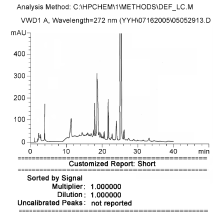
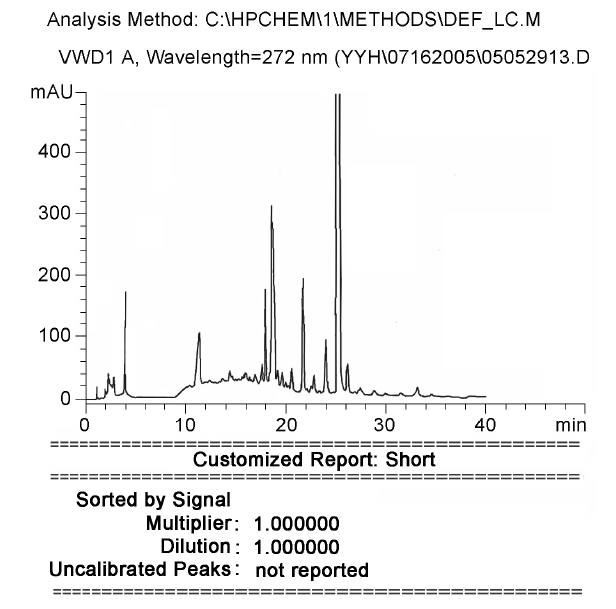
Figure 1

HPLC print of WCA"

Table 1

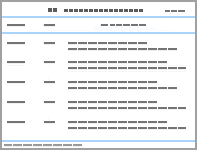
Sequences of primers for RT-PCR amplified genes"

Gene name UniGene cluster Primer Sequences (5'-3') Combining sites (bp) Amplifiers (bp)
Stat3 Hs.421342 forward CCTGGAGCAGCTCCATCAG 254 58
reverse AAACTGCCGCAGCTCCATT 311
Fas Hs.244139 forward GGCCCCTGTGTGAGTTGAGT 1 363 60
reverse GCAACCATCACTGCCCCTACT 1 422
Bcl-2 Hs.12677 forward TGTTGGCCGGATCACCAT 2 557 60
reverse TCCCCAATGATCAGGTCCTTT 2 616
Bax Hs.1959428 forward CCAAGGTGCCGGAACTGA 382 57
reverse CCCGGAGGAAGTCCAATGT 438
Bcl-xl Hs.102558 forward CATCAGGCATTCCCAGTACCA 335 59
reverse GGGTCAGAGTGCGGTCCTT 393

Table 2

Effects of WCA on gastric cancer cell SGC-7901 (ヌ±S,%)"

Group n PCNA TUNEL
Positive rate P Intense positiverate P Total positiverate P AI P
WCA-treated 8 35.73±6.01** 0.000 5 3.39±1.48* 0.015 5 39.03±7.37** 0.000 9 9.72±4.51** 0.000 7
5-FU-treated 9 37.86±16.50* 0.032 5 5.62±4.21 0.197 2 43.48±19.77* 0.040 6 5.74±1.75** 0.000 7
Untreated 8 53.48±9.34 8.78±5.43 62.26±13.80 2.45±1.37

Figure 2

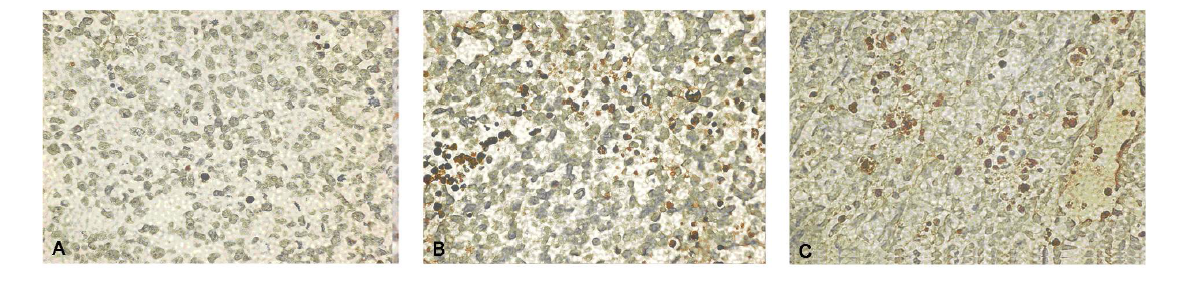
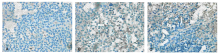
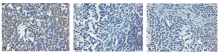
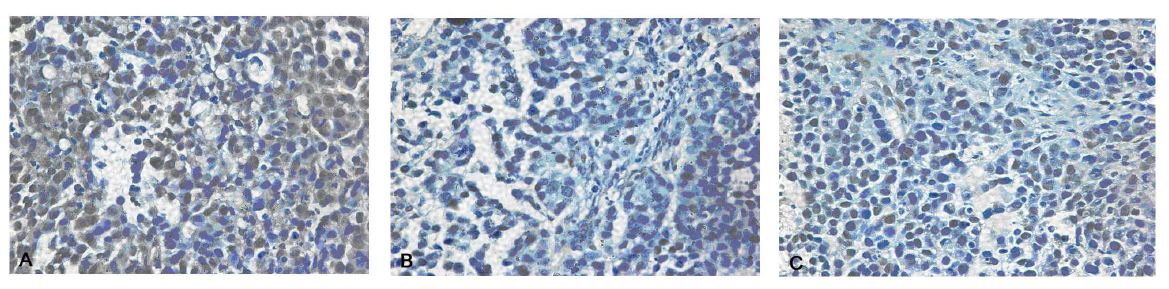
PCNA expression in various groups of human gastric adenocarcinoma cell line SGC-7901 grafted onto nude mouse detected by immunohistochemical method (SP method, ×400)A: Untreated group; B: WCA-treated group; C: 5-FU-treated group. PCNA is predominantly localized at nuclei."

Figure 3

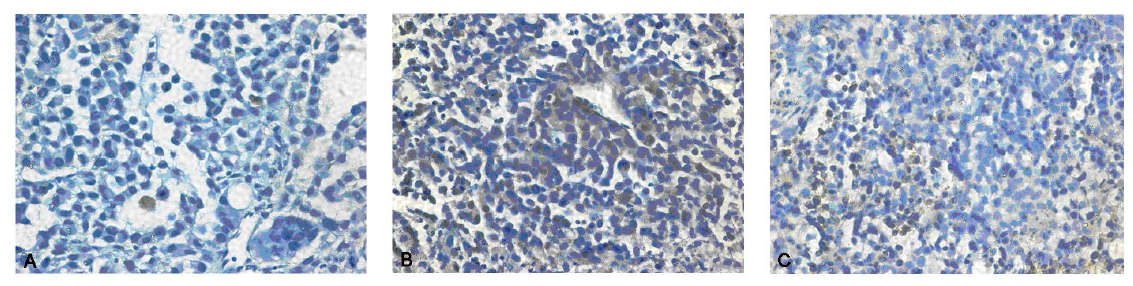
Apoptotic cells labeled in various groups of human gastric adenocarcinoma cell line SGC-7901 grafted onto nude mouse detected by TUNEL (×400)A: Untreated group; B: WCA-treated group; C: 5-FU-treated group."

Table 3

Effects of WCA on cleaved caspase-3, caspase-8 and caspase-9 of gastric cancer cell SGC-7901 (ヌ±S,%)"

Group n Cleaved caspase-3 (Asp 175) Cleaved caspase-8 (Asp 374) Caspase-9
Positive rate P Positive rate P Positive rate P
WCA-treated 8 5.20±2.26* 0.036 7 4.44±2.67 0.682 7 8.87±6.08** 0.008 6
5-FU-treated 9 4.73±1.76* 0.045 1 4.81±3.41 0.542 4 5.57±3.70* 0.025 5
Untreated 8 2.82±1.84 3.94±2.10 2.25±0.78

Figure 4

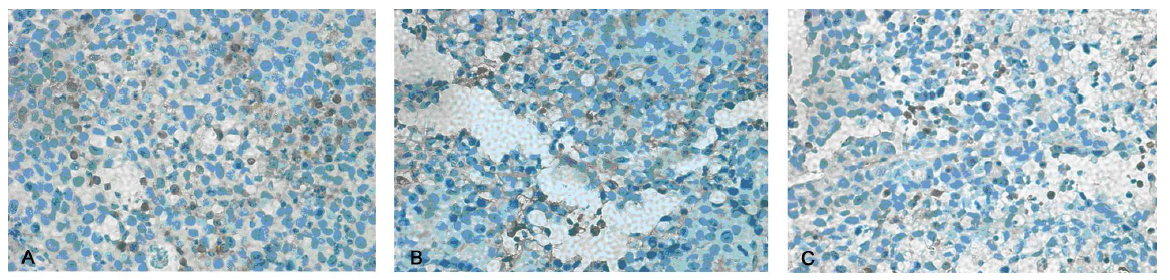
Cleaved caspase-3 (Asp 175) expression in various groups of human gastric adenocarcinoma cell line SGC-7901 grafted onto nude mouse detected by immunohistochemical method (SP method, ×400)A: Untreated group; B: WCA-treated group; C: 5-FU-treated group. Cleaved caspase-3 is predominantly localized at cytoplasm and pronuclear."

Figure 5

Cleaved caspase-8 (Asp 374) expression in various groups of human gastric adenocarcinoma cell line SGC-7901 grafted onto nude mouse detected by immunohistochemical method (SP method,×400)A: Untreated group; B: WCA-treated group; C: 5-FU-treated group. Cleaved caspase-8 is predominantly localized at cytoplasm."

Figure 6

Caspase-9 expression in various groups of human gastric adenocarcinoma cell line SGC-7901 grafted onto nude mouse detected by immunohistochemical method (SP method, ×400)A: Untreated group; B: WCA-treated group; C: 5-FU-treated group. Caspase-9 is predominantly localized at cytoplasm and pronuclear."

Table 4

Quantification of gene expression by RT-PCR assay"

Gene UniGene cluster Untreated WCA-treated
Stat3 Hs.421342 ΔΔCT 0 (n=3) 2.65 (n=4)
2–ΔΔCT 1 0.16 (0.11-0.24)
Fas Hs.244139 ΔΔCT 0 (n=4) 2.40 (n=5)
2–ΔΔCT 1 0.19 (0.11-0.32)
Bcl-2 Hs.12677 ΔΔCT 0 (n=4) 3.27 (n=5)
2–ΔΔCT 1 0.10 (0.06-0.17)
Bax Hs.1959428 ΔΔCT 0 (n=4) 1.80 (n=5)
2–ΔΔCT 1 0.29 (0.14-0.59)
Bcl-xl Hs.102558 ΔΔCT 0 (n=4) 2.21 (n=5)
2–ΔΔCT 1 0.22 (0.16-0.29)

Table 5

Effects of WCA on expressions of P-Stat3 and bcl-2 of gastric cancer cell SGC-7901 (ヌ±S,%)"

Group n P-Stat3 bcl-2
Positive rate P Intense Positiverate P Total Positive rate P Positive rate P
WCA-treated 8 35.93±12.67** 0.002 4 3.64±1.72** 0.002 3 39.57±13.31** 0.000 2 1.62±0.82** 0.000 6
5-FU-treated 9 36.95±27.21 0.073 2 4.38±3.62** 0.005 0 41.33±30.22* 0.024 3 7.72±5.31 0.936 4
Untreated 8 56.49±9.34 13.16±7.06 69.65±10.80 7.53±3.73

Figure 7

Phospho-Tyr705-Stat3 expression in various groups of human gastric adenocarcinoma cell line SGC-7901 grafted onto nude mouse detected by immunohistochemical method (SP method,×400)A: Untreated group; B: WCA-treated group; C: 5-FU-treated group. Phospho-Tyr705-Stat3 is predominantly localized at nuclei."

Figure 8

Bcl-2 expression in various groups of human gastric adenocarcinoma cell line SGC-7901 grafted onto nude mouse detected by immunohistochemical method (SP method,×400)A: Untreated group; B: WCA-treated group; C: 5-FU-treated group. Bcl-2 is predominantly localized at cytoplasm and nuclear membrane."

[1] Na Wu , Lu Song , Xin-xin Yang, Jiang-lei Wei , Zhen-guo Liu. Effects of Chinese herbal medicine Tianqi Pingchan Granule on G protein-coupled receptor kinase 6 involved in the prevention of levodopa-induced dyskinesia in rats with Parkinson disease. Journal of Chinese Integrative Medicine, 2012, 10(9): 1018-1024.
[2] Avijit Paul, Kausik Bishayee, Samrat Ghosh, Avinaba Mukherjee, Sourav Sikdar, Debrup Chakraborty, Naoual Boujedaini, Anisur Rahman Khuda-Bukhsh. Chelidonine isolated from ethanolic extract of Chelidonium majus promotes apoptosis in HeLa cells through p38-p53 and PI3K/AKT signalling pathways. Journal of Chinese Integrative Medicine, 2012, 10(9): 1025-1038.
[3] Yong Zhang, Xiao-wen Sun, Jian-hua Xu, Hai Lu, Zhong-ze Fan, Jue Sun, Xiao-xiao Zhang. Effects of medicated serum prepared with Chinese herbal medicine Changweiqing on pharmacokinetics of oxaliplatin in colon cancer cells. Journal of Chinese Integrative Medicine, 2012, 10(8): 901-910.
[4] Xin-min Li, Hui Chen, Yan-yan Ren, Yan-li Lu. Effects of Chinese herbal medicine Xifeng Capsule on multidrug resistance-associated protein 1 expression in hippocampus and cortex of rats with lithium-pilocarpine-induced epilepsy. Journal of Chinese Integrative Medicine, 2012, 10(8): 911-917.
[5] Di Li, Guan-liang Wang, Meng-ya Shan, Jia-han Liu, Lin Wang, De-zeng Zhu. Effects of ursolic acid on c-Cbl-associated protein expression in 3T3-L1 adipocytes with insulin resistance. Journal of Chinese Integrative Medicine, 2012, 10(8): 886-893.
[6] Dong-mei Zhang, Li-xia Lou, Ai-ming Wu, Xi-ying Lü, Zhao-juan Hu, Yan-hong Zhang, Hong-fang Liu. Effects of Astragalus membranaceus and Potentilla discolor mixture on insulin resistance and its related mRNA expressions in KKAy mice with type 2 diabetes. Journal of Chinese Integrative Medicine, 2012, 10(7): 821-826.
[7] Wei-hua Xu, Ze-huai Wen, Wei-xiong Liang, Qi Wang. A review of research on the development of instruments for therapeutic efficacy evaluation of traditional Chinese medicine. Journal of Chinese Integrative Medicine, 2012, 10(7): 726-737.
[8] Yan Guan , Hui Zhang, Wei Zhang, Shi-bing Su . Analysis of differential gene expression profile in peripheral blood of patients with chronic hepatitis B and syndromes of dual deficiency of liver and kidney yin and accumulation of dampness heat. Journal of Chinese Integrative Medicine, 2012, 10(7): 751-756.
[9] Lin Wang, Guan-liang Wang, Jia-han Liu, Di Li, De-zeng Zhu, Liang-neng Wu . Effects of ursolic acid in ameliorating insulin resistance in liver of KKAy mice via peroxisome proliferator-activated receptors α and γ. Journal of Chinese Integrative Medicine, 2012, 10(7): 793-799.
[10] Mei-jiao Mao, Jun-ping Hu, Cong Wang, Yi-yi Zhang, Ping Liu. Effects of Chinese herbal medicine Guanxinkang on expression of PPARγ-LXRα-ABCA1 pathway in ApoE-knockout mice with atherosclerosis. Journal of Chinese Integrative Medicine, 2012, 10(7): 814-820.
[11] Yi-tao Zhao , Xin-guang Zhang , Li Bai , Li-qing Li , Jian-er Yu . Effects of Chinese herbal medicine Pingchuan Formula on airway inflammation, interferon-γ and interleukin-4 in mice with asthma. Journal of Chinese Integrative Medicine, 2012, 10(7): 807-813.
[12] Yogesh Bendale, Vineeta Bendale, Saili Paul, Soumya Sundar Bhattacharyya. Green synthesis, characterization and anticancer potential of platinum nanoparticles Bioplatin. Journal of Chinese Integrative Medicine, 2012, 10(6): 681-689.
[13] Surendra Kr. Sharma, Naveen Goyal. Protective effect of Heliotropium eichwaldi against cisplatin-induced nephrotoxicity in mice. Journal of Chinese Integrative Medicine, 2012, 10(5): 555-560.
[14] Jing Guo, Ju-yong Wang, Zhan Zheng, Qing Wang, Chang-sheng Dong . Effects of Chinese herbal medicine Feiyanning Decoction on the ratio of CD4+CD25+ regulatory T cells and expression of transcription factor Foxp3 in mice bearing Lewis lung carcinoma. Journal of Chinese Integrative Medicine, 2012, 10(5): 584-590.
[15] Zhan gheng, Ju-yong Wang, Qing Wang, Ling Xu, Zhen-ye Xu. Effects of Chinese herbal medicine Feiyanning decoction on expressions of nucleosome conformation-regulating factors H3-K56, Rtt109, Asf1 and E2F1 in Lewis-bearing mice. Journal of Chinese Integrative Medicine, 2012, 10(4): 448-453.
Viewed
Full text


Abstract

Cited

  Shared   
  Discussed   
[1] Jin-zhou Tian, Jing Shi, Xin-qing Zhang, Qi Bi, Xin Ma, Zhi-liang Wang, Xiao-bin Li, Shu-li Shen, Lin Li, Zhen-yun Wu, Li-yan Fang, Xiao-dong Zhao, Ying-chun Miao, Peng-wen Wang, Ying Ren, Jun-xiang Yin, Yong-yan Wang, Beijing United Study Group on MCI of the Capital Foundation of Medical Developments. An explanation on "guiding principles of clinical research on mild cognitive impairment (protocol)". Journal of Chinese Integrative Medicine, 2008, 6(1): 15-21
[2] Yi-ting He, Qing-lin Zha, Jian-ping Yu, Yong Tan, Cheng Lu, Ai-ping Lv. Principal factor analysis of symptoms of rheumatoid arthritis and their correlations with efficacy of traditional Chinese medicine and Western medicine. Journal of Chinese Integrative Medicine, 2008, 6(1): 32-36
[3] Jun Cai, Hua Wang, Sheng Zhou, Bin Wu, Hua-rong Song, Zheng-rong Xuan. Effect of Sijunzi Decoction and enteral nutrition on T-cell subsets and nutritional status in patients with gastric cancer after operation: A randomized controlled trial. Journal of Chinese Integrative Medicine, 2008, 6(1): 37-40
[4] Wei Zhang, Xiang-feng Lu, Xiao-mei Zhang, Jian-jun Wu, Liang-duo Jiang. A rat model of pulmonary fibrosis induced by infusing bleomycin quickly through tracheal intubation. Journal of Chinese Integrative Medicine, 2008, 6(1): 60-67
[5] A-gao Zhou, Yong Zhang, Gang Kui, De-Yun Kong, Hai-liang Ge, Qiu-hua Ren, Jia-rong Dong, Sheng Hong, Xu-ming Mao, Yin Wang, Hui-zheng Zhang, Shu-jun Wang. Influence of traditional Chinese compound recipes with different efficacy on body weight, tumor weight and immune function in H22 cancer-bearing mice. Journal of Chinese Integrative Medicine, 2008, 6(1): 77-82
[6] Guo-hong Yuan, Xiao-jing Pang, He-chao Ma. Synergic effects of Danggui Buxue Decoction in reducing toxicity of cytoxan in tumor-bearing mice. Journal of Chinese Integrative Medicine, 2008, 6(1): 83-88
[7] Li Zhou, Hong-xing Zhang, Ling-guang Liu, Wen-jun Wan. Effect of electro-acupuncture at Fenglong (GV 16) on nitric oxide and endothelin in rats with hyperlipidemia. Journal of Chinese Integrative Medicine, 2008, 6(1): 89-92
[8] Jin-zhou Tian, Jing Shi, Xin-qing Zhang, Qi Bi, Xin Ma, Zhi-liang Wang, Xiao-bin Li, Shu-li Shen, Lin Li, Zhen-yun Wu, Li-yan Fang, Xiao-dong Zhao, Ying-chun Miao, Peng-wen Wang, Ying Ren, Jun-xiang Yin, Yong-yan Wang, Beijing United Study Group on MCI of the Capital Foundation of Medical Developments. Guiding principles of clinical research on mild cognitive impairment (protocol). Journal of Chinese Integrative Medicine, 2008, 6(1): 9-14
[9] Xin-jun Wang, Ling-ling Wang . A mechanism of endogenous opioid peptides for rapid onset of acupuncture effect in treatment of depression. Journal of Chinese Integrative Medicine, 2010, 8(11): 1014-1017
[10] Bo Wang , Wei Yan , Li-hui Hou, Xiao-ke Wu. Disorder of Tiangui (kidney essence) and reproductive dysfunction in patients with polycystic ovary syndrome. Journal of Chinese Integrative Medicine, 2010, 8(11): 1018-1022
[an error occurred while processing this directive]